
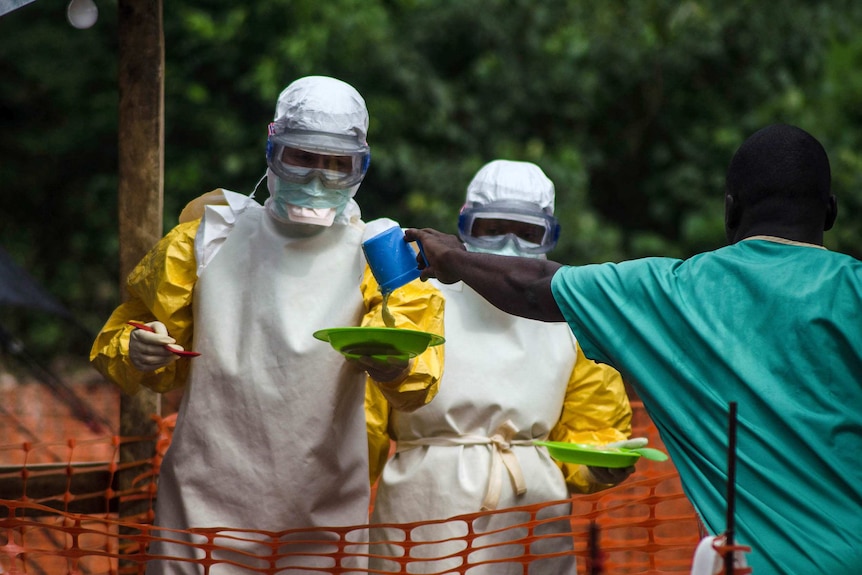

The Nigeria Centre for Disease Control and Prevention, NCDC, has placed the country on heightened Ebola alert, warning that Nigeria faces a high risk of Ebola Virus Disease, EVD, importation, amid worsening outbreak in the Democratic Republic of Congo, DRC, and Uganda.
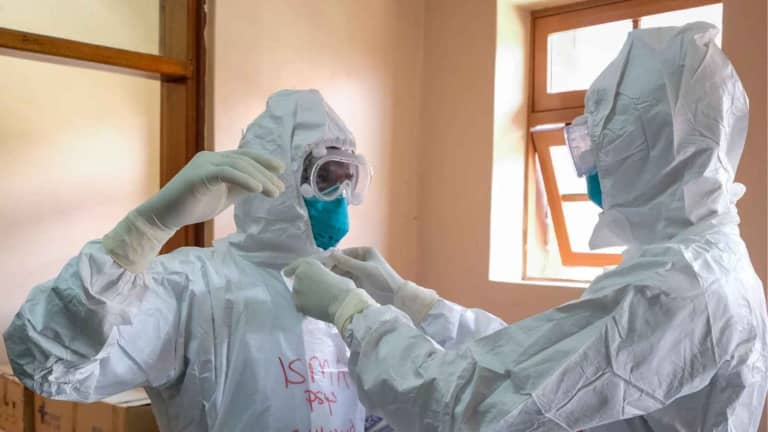 Director-General of NCDC, Dr. Jide Idris, disclosed this in an emergency preparedness update issued weekend, revealing that although Nigeria had not recorded any confirmed Ebola case linked to the ongoing regional outbreak, authorities had activated nationwide surveillance and response mechanisms to prevent a possible outbreak.
The update followed increasing cases in the Democratic Republic of Congo and Uganda, and the World Health Organisation’s declaration of a public health emergency of international concern, PHEIC.
The agency said its latest dynamic risk assessment identified international travel, population movement, porous borders, and delayed symptom recognition as major factors increasing Nigeria’s vulnerability.
“The assessment estimated the risk of Ebola importation into Nigeria as high due to ongoing transmission in the DRC and Uganda, international travel and population movement, uncertainty regarding the full magnitude of the outbreak, and possible delayed recognition because symptoms may overlap with malaria and Lassa fever,” the statement said.
The NCDC noted that high-risk states, border communities, transport hubs and points of entry had already been identified for intensified monitoring.
In response to the growing threat, the agency announced that the National Emergency Operations Centre, EOC, had been placed on alert mode, while the National Incident Management System, NIMS, had been activated to coordinate rapid national response efforts.According to NCDC, Rapid Response Teams and epidemiologists across the country have also been placed on standby for immediate deployment to any state where a suspected case may emerge.
The agency said surveillance activities had been strengthened nationwide, especially at airports, border communities and health facilities, with officials monitoring alerts, rumours and unusual disease patterns to ensure early detection.
“NCDC is intensifying event-based surveillance and epidemic intelligence activities across the country,” the statement added.
To forestall healthcare-associated transmission, the agency said Ebola Infection Prevention and Control, IPC, readiness tools and checklists had been distributed to hospitals nationwide, while healthcare workers were undergoing refresher sensitisation on triage systems, case identification and protective protocols.
States, the NCDC noted, had also been directed to designate isolation and treatment centres, assess bed capacity, strengthen ambulance and referral systems and stock essential emergency supplies. The NCDC further disclosed that Nigeria’s laboratory network had been placed on alert, with testing capability already available in states hosting international points of entry.
Critical Ebola response commodities, including Personal Protective Equipment, PPE, laboratory consumables, body bags and IPC materials, the agency noted, were also being strategically prepositioned across the country.
Amid growing fears and misinformation on social media, the agency said it had intensified risk communication campaigns and launched aggressive rumour management initiatives to combat false claims surrounding the disease.
“NCDC has developed and disseminated Ebola myths and facts materials to address misinformation and false claims circulating online,” the agency stated.
The public was urged to maintain regular hand hygiene, avoid direct contact with body fluids of sick persons, promptly report unexplained illnesses or deaths, and avoid spreading unverified informationTravellers arriving from countries with confirmed Ebola cases were advised to monitor their health for 21 days and immediately report symptoms such as fever, weakness, vomiting or unexplained bleeding.
Healthcare workers were also warned to maintain a high index of suspicion and strictly comply with infection prevention protocols, including proper use of PPE and immediate isolation of suspected cases.
Reassuring Nigerians, NCDC emphasised that Ebola was not airborne and that the country currently had no confirmed case linked to the regional outbreak.
“We will continue to monitor the situation closely and provide updates as necessary,” Dr. Idris stated.
Recall that Nigeria earned global commendation in 2014 for successfully containing Ebola after the virus was imported into the country through an infected traveller from LiberiaLagos ramps up surveillance as 177 die in Central Africa outbreak
Meanwhile, Lagos State government has intensified surveillance and border health screening, following the worsening Ebola Virus Disease outbreak in Central and East Africa, where at least 177 deaths had been recorded from about 700 suspected cases.
The state government advised Lagosians who have contact with travellers from affected areas and were experiencing symptoms to call 767 or 112, or contact the State Epidemiologist on 08023169485.
Disclosing this yesterday, Lagos State Commissioner for Health, Prof. Akin Abayomi, in a post on his X handle, assured residents that no suspected or confirmed case of Ebola had been recorded in the state.
Abayomi said the state was closely monitoring the evolving situation and remained fully prepared to respond to any public health threat. “We are closely monitoring the evolving Ebola outbreak situation in Central and East Africa… we have not seen any cases resembling Ebola in Lagos to date,” the commissioner stated.
He added that Lagos had activated its outbreak-tested biosecurity framework, described as a “Biosecurity Bio-shield,” designed to detect, contain and respond rapidly to high-consequence infectious diseases.
He said the system, strengthened since the 2014 Ebola outbreak and reinforced during COVID-19 as well as other outbreaks such as cholera, diphtheria and Lassa fever, remained on permanent alert.
“The Lagos State Incident Command System, ICS, led by Governor Babajide Olusola Sanwo-Olu, is on standby to coordinate emergency response if required,” he said.
He added that its Emergency Operations Centre, EOC, operates round-the-clock, with epidemiologists and surveillance officers tracking community-level disease signals across LagosThe commissioner further confirmed that Lagos State Infectious Disease Hospital remained fully prepared, with isolation wards, intensive care units and case management facilities ready for any suspected infectious disease cases.
He added that its Biosafety Level-3 Laboratory in Yaba was on enhanced alert for rapid diagnosis of high-risk pathogens.On border control, Prof. Abayomi said all flights arriving from East and Central Africa were under intensified screening, in collaboration with the Nigeria Centre for Disease Control, NCDC, the Federal Airports Authority of Nigeria, FAAN, and the Nigeria Institute of Medical Research, NIOMR
He said surveillance had also been strengthened at seaports and land borders, with port health officers placed on heightened alert.
