Tinubu’s Reforms Driving Development Without Borrowing In Katsina, Says Radda

Katsina State Governor, Dikko Radda, has said the economic reforms introduced by President Bola Ahmed Tinubu are helping state governments execute major development projects while paying workers’ salaries and pensions without relying on loans.
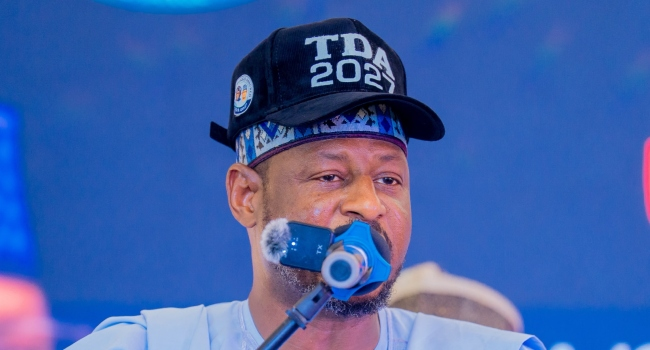
 Radda made the statement on Sunday, August 16, 2026, during the Tinubu/Dikko Assured 2027 Islamiyya Teachers’ Empowerment Programme, school commissioning and the virtual inauguration of 45 solar-powered streetlights in Katsina.
The governor disclosed that his administration had executed development projects worth more than ₦30 billion without borrowing. He described this as evidence of responsible financial management and prudent use of government resources.
According to Radda, Katsina State currently does not take loans to finance projects in any sector. He said the state has also been able to pay salaries and pensions and meet its obligations to citizens.
The governor contrasted the situation with the past, when, according to him, the state depended on borrowing to pay workers’ salaries.
Radda attributed the improvement partly to reforms and support from the Federal Government under President Tinubu. He specifically highlighted local government financial autonomy as one of the reforms that has strengthened the ability of states to deliver development projects and meet their financial obligations.
He urged Nigerians to assess governments based on tangible achievements and measurable results rather than political rhetoric or negative narratives.
“Once leaders make promises to the people, they have a responsibility to fulfil those promises,” Radda said, stressing that leadership should be based on trust and accountability.
The governor also commended the Tinubu/Dikko Assured initiative for focusing on grassroots development, particularly through its empowerment of Islamiyya teachers.
As part of the programme, Radda announced a personal donation of ₦10,000 to each of the 690 beneficiaries. The donation amounted to ₦6.9 million, which he rounded up to ₦7 million.
The governor further called on individuals, organisations and philanthropists to complement government efforts in addressing developmental challenges, noting that government alone cannot provide every intervention required by communities.
The development comes amid broader claims from the Federal Government that its economic reforms have increased revenues available to state governments, allowing them to reduce reliance on borrowing and invest more in infrastructure and human development.