
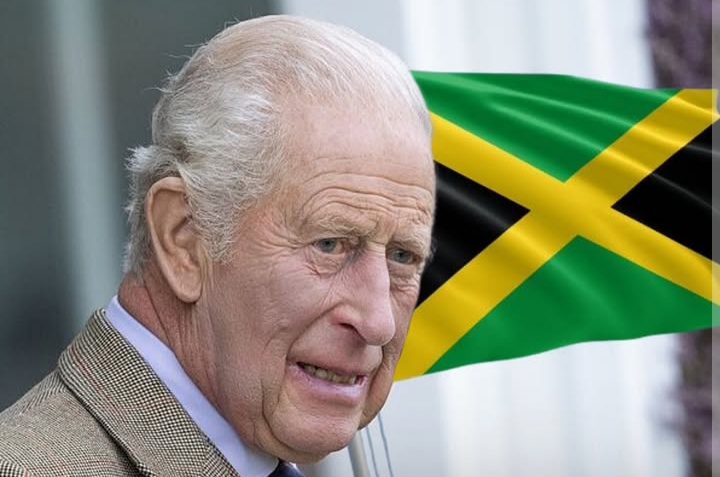
JAMAICA PETITIONS KING CHARLES FOR SLAVERY REPARATIONS AND LEGAL REVIEW

 The Jamaican government has formally petitioned King Charles III over Britain’s historical involvement in the transatlantic slave trade, asking for legal consideration of whether Jamaica is entitled to reparations for the enslavement of Africans.
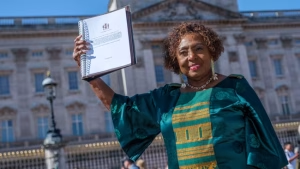
A delegation led by Jamaica’s Minister of Culture, Gender, Entertainment and Sport, Olivia Grange, travelled to London to submit the petition. The move marks a significant shift in Jamaica’s long-running campaign for reparatory justice, taking the issue from political advocacy into a legal process.
 The petition asks the King to refer three key questions to the Judicial Committee of the Privy Council, which serves as Jamaica’s highest court of appeal. Jamaica wants the committee to consider whether the forced transportation and enslavement of Africans was unlawful, whether it amounted to crimes against humanity, and whether the United Kingdom has a legal obligation to provide a remedy or reparations to Jamaica.
The petition was timed to coincide with the anniversary of the 1781 Zong massacre, in which enslaved Africans were thrown overboard from the British slave ship Zong. The incident became an important part of the abolitionist movement and remains a powerful symbol of the brutality of the transatlantic slave trade.
Jamaica’s government argues that the legacy of slavery continues to affect the country’s economic and social development. Jamaican officials say they want legal answers about Britain’s historical responsibility before deciding what further action to pursue. Grange has stressed that the immediate objective is to obtain answers rather than simply seek a financial payout.
Britain has historically rejected calls for slavery reparations, arguing that historical actions should be judged according to the laws that existed at the time. The UK government has acknowledged the suffering caused by slavery but has not agreed to pay reparations.
King Charles has previously spoken about the lasting impact of slavery and the importance of understanding historical injustices. However, the King does not personally decide the legal outcome of Jamaica’s petition; the matter would proceed through the constitutional and legal processes governing the Privy Council.
The Jamaican delegation is also using its visit to Britain to discuss the possible repatriation of Jamaican cultural artefacts held by the British Museum. Officials hope to make progress on returning objects associated with the Taíno, the indigenous people of Jamaica.
The petition is part of a wider Caribbean campaign for reparatory justice. Jamaica and other Caribbean countries have repeatedly called on European governments to acknowledge the consequences of slavery and consider measures such as reparations, debt relief and the return of cultural property.
The outcome of Jamaica’s petition could have wider political implications, particularly as the country continues to consider replacing the British monarch as its head of state and becoming a republic.


