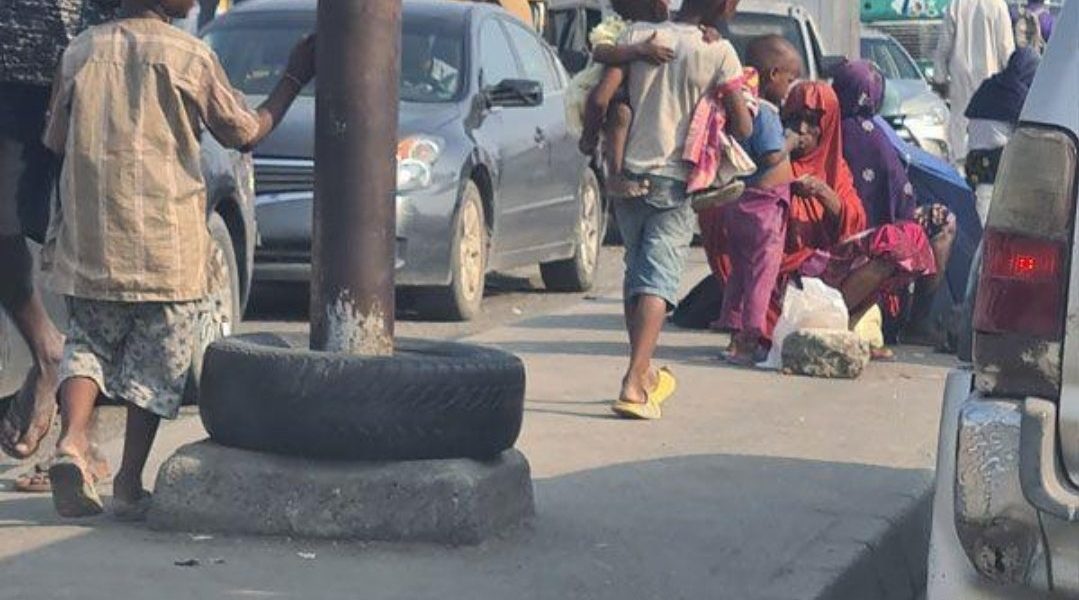

Lagos wants beggars off the streets. The biggest benefit may have little to do with making the city look better.
 The Lagos State House of Assembly held a public hearing on September 15 on the Street Begging and Street Urchins (Prohibition, Prevention and Rehabilitation) Bill 2026. The proposal would restrict begging across places such as traffic intersections, pedestrian bridges, markets and motor parks. Repeat offenders could face a fine of up to ₦200,000, while serial offenders could ultimately receive up to two years’ imprisonment.
At first glance, this looks like another attempt to make Lagos cleaner and remove beggars and “area boys” from places where motorists and pedestrians encounter them.
But there is a much bigger implication hiding underneath the legislation:
If Lagos genuinely removes people who survive by begging from the streets, government may finally be forced to deal with the people behind the begging rather than merely the begging itself.
And that could be the most important benefit of the entire exercise.
Begging currently allows extreme poverty to survive without becoming government’s immediate responsibility
Think about what happens at a typical Lagos traffic light.
Someone approaches a vehicle asking for ₦100. Another motorist gives ₦500. Someone buys food for a woman carrying a child. Another person gives money to someone with a disability.
Multiply those tiny transactions by thousands of motorists and thousands of encounters.
You effectively have an informal welfare system.
There is no registration. No assessment of who genuinely needs help. No social worker. No database. No guarantee that the child receiving money gets to keep it. No attempt to determine whether the person can work, requires medical attention, has somewhere to sleep or is being exploited.
Yet enough money may change hands to allow the arrangement to continue.
That means ordinary Lagosians are, in a very crude way, helping to manage a social problem that government would otherwise have to confront directly.
Remove street begging and something interesting happens:
The hungry person remains hungry.
The person with a disability still requires support.
The homeless child still needs somewhere to sleep.
The unemployed adult still needs income.
The difference is that motorists are no longer available as the unofficial welfare department.
That may explain why the rehabilitation part of this bill is actually more consequential than the prohibition
The proposed law does not only contemplate arrests and punishment. It would require the Ministry of Youth and Social Development to establish rehabilitation and welfare centres offering temporary accommodation, literacy programmes, psychological counselling, vocational training and life-skills education. First-time offenders are supposed to be warned and referred for rehabilitation rather than immediately imprisoned.
If implemented as written, that changes the state’s relationship with street poverty.
Imagine two scenarios.
In the first, a 20-year-old begs at a traffic light for five years. Lagosians occasionally give him money. Nobody knows his name, education level, family situation or why he is there.
In the second, he is removed from the street, profiled, assessed and connected to accommodation, literacy training or vocational support.
The second system is far more demanding for government.
But it also creates something roadside charity cannot easily create: a possible exit from begging.
Giving someone ₦500 may solve tonight’s food problem. It rarely changes why that person will return to the same traffic light tomorrow.
That does not make giving wrong. It simply means charity and social policy perform different jobs.
Children may be where the biggest long-term impact is felt
One of the strongest parts of the proposal concerns children.