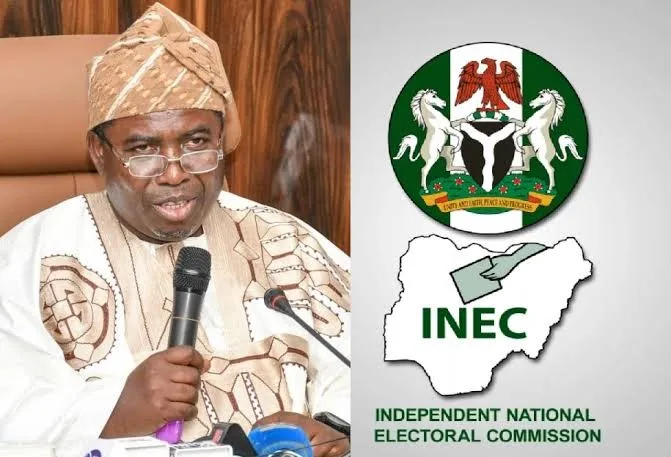

The Independent National Electoral Commission (INEC) has unveiled a “zero-failure” operational plan for the 2027 general elections, with its chairman, Prof. Joash Amupitan, warning electoral officials against partisanship, negligence and deviations from laid-down procedures.
 Amupitan spoke yesterday in Kaduna at the North-West zonal interactive meeting with staff and readiness assessment for the 2027 general elections, saying the credibility of the elections would depend largely on the conduct and competence of officials at polling units.
He said the commission had learnt lessons from previous elections and recent off-cycle polls, stressing that the success recorded in the Osun governorship election had raised expectations for the 2027 elections.
According to him, unlike the single-state Osun election, the 2027 polls would involve all 36 states and the Federal Capital Territory, making meticulous preparation necessary.
The INEC chairman said the Presidential and National Assembly elections were scheduled for January 16, 2027, while the governorship and state Houses of Assembly elections would hold on February 6.
He identified voter apathy, declining public trust and misinformation and disinformation as major challenges confronting the electoral process.
Amupitan warned that delays in opening polling units, perceived bias by officials and poor response to technical problems could further fuel false narratives and deepen public distrust in the commission.
He said INEC would therefore strengthen its technology, result management systems, voter verification and result transmission mechanisms ahead of the elections.
On voter registration, the chairman said the three phases of the Continuous Voter Registration (CVR) conducted between August 2025 and July 2026 produced 10,772,421 new registrations, subject to biometric verification.
He said the commission had also introduced online registration and printable Permanent Voter Cards (PVCs) to reduce delays and ensure that eligible voters were not disenfranchised by logistical challenges.
Amupitan further announced that the commission had commenced the procurement and distribution of new operational pick-up vehicles to state and local government offices nationwide.
He said the vehicles were expected to improve the mobility, security and operational efficiency of electoral officials, particularly in difficult terrains.
The chairman also disclosed that INEC had introduced a new salary structure for its workforce and increased overheads for state offices by 150 per cent from July 2026 to reduce operational difficulties.
He directed officials to remain neutral, stressing that their responsibility was to implement the law rather than serve the interests of any candidate or political party.
Earlier, the Supervising National Commissioner for Kaduna, Mohammed Kudu Haruna, said the chairman’s zonal visits were aimed at identifying operational challenges and addressing shortcomings observed in previous elections.
Haruna said the chairman had, during a visit to the Emir of Zazzau, discussed preparations for the 2027 elections and the forthcoming collection of PVCs.
He added that the traditional ruler had expressed concern over the late opening of polling units during the 2023 general elections.