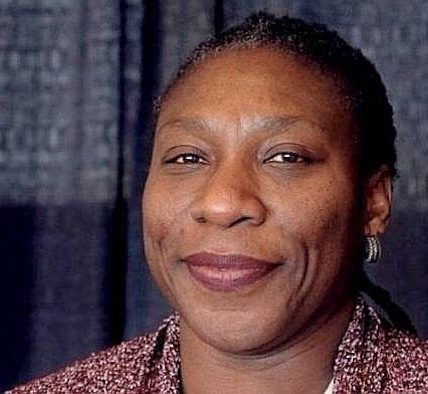

US-based lawyer and researcher Tolulope Awoyomi, whose work bridges artificial intelligence and business, speaks with AYOOLA OLASUPO about her journey from Nigeria to the US, her books on AI, the technology’s growing impact on the legal profession and Nigeria’s readiness to embrace it.

You gained admission to study Law at 14. What inspired you to pursue law at such a young age?
I grew up in Nigeria, where education was a very important part of my upbringing. I gained admission to study Law at 14, so I had to become independent and disciplined quite early. By 19, I had completed my law degree, and by 20, I finished Law School and got called to the Nigerian Bar.
Growing up in Nigeria also made me resourceful. You learn to work with what you have, keep learning and find your way even when the path is not clearly laid out. Those qualities have stayed with me throughout my career.
So This Happened (EP 259) review the celebration…
When I chose Law, I imagined a fairly traditional legal career. I expected to qualify, practise, grow professionally and build my career within the profession. However, Law eventually gave me much more than I had anticipated. It trained me to think carefully about rules, evidence, responsibility, risk, interpretation and consequences.
I did not know then that those same skills would later become relevant to my work in artificial intelligence. My career has taken a different direction from what I initially imagined, but Law remains an important part of how I think.
When did you first develop an interest in AI and technology?I first heard the term “artificial intelligence” in 2018. Someone told me he was planning to pursue a master’s degree in artificial intelligence. I remember hearing those words and being fascinated by the name. Something about it drew me in, and that conversation stayed with me.
In early 2022, I had the opportunity to study AI more seriously. By 2023, I had started teaching about AI on LinkedIn, and in 2024, moved on to YouTube. That led to research, the podcast, practical AI workflows, teaching professionals and, eventually, my books. What started as curiosity gradually became a major part of my work.
Why did you relocate from Nigeria to the US?
A major motivation was education and the opportunity to broaden my professional exposure. I wanted to learn in a different environment, encounter new ideas and understand how Law, business and technology were evolving globally.
I later pursued an LL.M. in Business and Finance Law at George Washington University, and my education eventually expanded to include information systems, business analytics and artificial intelligence.
Moving to the US exposed me to possibilities I had not initially imagined for my career. It also gave me the opportunity to combine disciplines that are often treated separately.
What were the biggest challenges you faced when you first arrived in the US? One of the biggest adjustments was learning to operate in a completely different professional environment. Moving to another country involves more than changing geography. You have to learn a new system, build relationships and figure out how your previous education and experience fit into that system.
Rebuilding professional networks was another challenge. In Nigeria, you already understand how things work and have established relationships. In a new country, you have to establish yourself again. That period required a lot of learning, patience and a willingness to keep developing new skills.How did you transition from law into AI, information systems and business analytics?
It happened gradually. After studying Law and completing my LL.M. in Business and Finance Law, I became increasingly interested in systems and how technology could help people and organisations work better. That curiosity led me into information systems and business analytics and eventually into more formal study of AI and machine learning.
I also learned software development because I wanted to understand technology beyond the surface. I did not want to discuss AI only from a legal or policy perspective. I wanted to understand how systems are built, what data they rely on, how they interact with other systems and where they can fail. Over time, those different areas began to connect.
The more I studied AI, the clearer it became that many of its most difficult questions were not purely technical. Who is responsible when an AI system causes harm? What happens to personal or confidential information? Who owns AI-generated content? How should AI-generated evidence be treated? How should organisations govern systems that can increasingly make recommendations or take action?
These are legal, ethical, governance and technical questions at the same time. My background made that intersection a natural fit for me. Law trained me to think about responsibility and consequences, while technology taught me how systems work. AI became the field where those interests converged.What key message do you hope readers will take away from your books on AI?
I wrote Simple Book of AI because I kept meeting intelligent people who wanted to understand AI but felt excluded from the conversation because they lacked technical training. I understand that feeling because my own journey into AI did not begin with computer science.
I wanted to explain what AI is, how we got here, how it works, where it is being used and some of its implications without requiring readers to have a technical background. There is a difference between making something simple and making it shallow. My goal was to make AI understandable without sacrificing substance.
If readers finish the book feeling more confident about asking questions about AI and participating in conversations about it, then it will have achieved what I intended.
I also noticed a gap between the people building technology and those responsible for understanding its legal implications. Lawyers increasingly need sufficient technical knowledge to ask better questions about AI. At the same time, developers, businesses and technology teams need to understand issues such as privacy, intellectual property, liability, governance, evidence and responsible AI. That vision led to the Everything AI & Law Podcast, where I speak with people working across AI, Law, legal technology, governance, research and business.
For me, the podcast is also a form of education. Not everybody will read an academic paper or take an AI course, but they may listen to a thoughtful conversation with someone working directly on these issues.
Has living and working in the US influenced your professional and personal outlook?
Living in the US exposed me to people building careers across disciplines. It also helped me realise that the skills we acquire do not have to remain confined to the fields in which they were originally developed.
At the same time, being Nigerian continues to shape the problems I care about. I think a lot about access, education and how emerging technologies can create opportunities for people who might otherwise be excluded from conversations about technology. My work is informed by both perspectives.
What do you consider your most significant achievement since relocating to the US?
I have conducted and published research, taught AI to technical and non-technical audiences, developed practical AI workflows, hosted more than 50 conversations on the Everything AI & Law Podcast and written books to help people understand AI and its legal implications.
I am also increasingly working with professionals and organisations on the practical aspects of AI adoption.What means the most to me is that something I first became curious about in 2018 has evolved into work that allows me to teach, build, conduct research and help others make better decisions about technology.
How prepared do you think Nigeria is to embrace AI, particularly in its legal and business sectors?
Nigeria has enormous potential, but I would describe us as being at the building stage rather than at the finish line. There are encouraging developments, including national efforts around AI strategy, research, innovation and adoption. We are also beginning to see more practical legal AI products and growing discussions about AI governance, data protection, cybersecurity and responsible use.
However, adoption alone is not enough. We need stronger AI literacy, reliable digital infrastructure, better access to data, clear governance frameworks, stronger cybersecurity and data protection measures, and professionals who understand both what these systems can do and their limitations.
In the legal profession, I believe lawyers should be learning about AI now, not because AI will eliminate the need for lawyers, but because the way legal work is researched, drafted, reviewed and delivered is already changing.
What benefits can Nigerians gain from pursuing careers in these fields?
There are significant opportunities. One of the biggest advantages of AI and technology is that geography matters less for certain types of work than it once did. Nigerians can develop skills that are valuable both locally and internationally.
Opportunities exist in AI engineering, data, cybersecurity, product management, AI governance, legal technology, business analysis, automation, responsible AI, research and many other areas. There is also enormous potential in combining AI with an existing profession.
A lawyer who understands AI has an advantage that someone who understands only AI may not have. The same applies to doctors, accountants, teachers, engineers, entrepreneurs and professionals in finance.
I would encourage Nigerians not to assume that participating in AI means everyone must become a machine-learning engineer.
Instead, they should learn enough about the technology to ask: What problems in my profession, business or community could I solve more effectively with these tools? I believe some of the most interesting opportunities will emerge from that approach.