
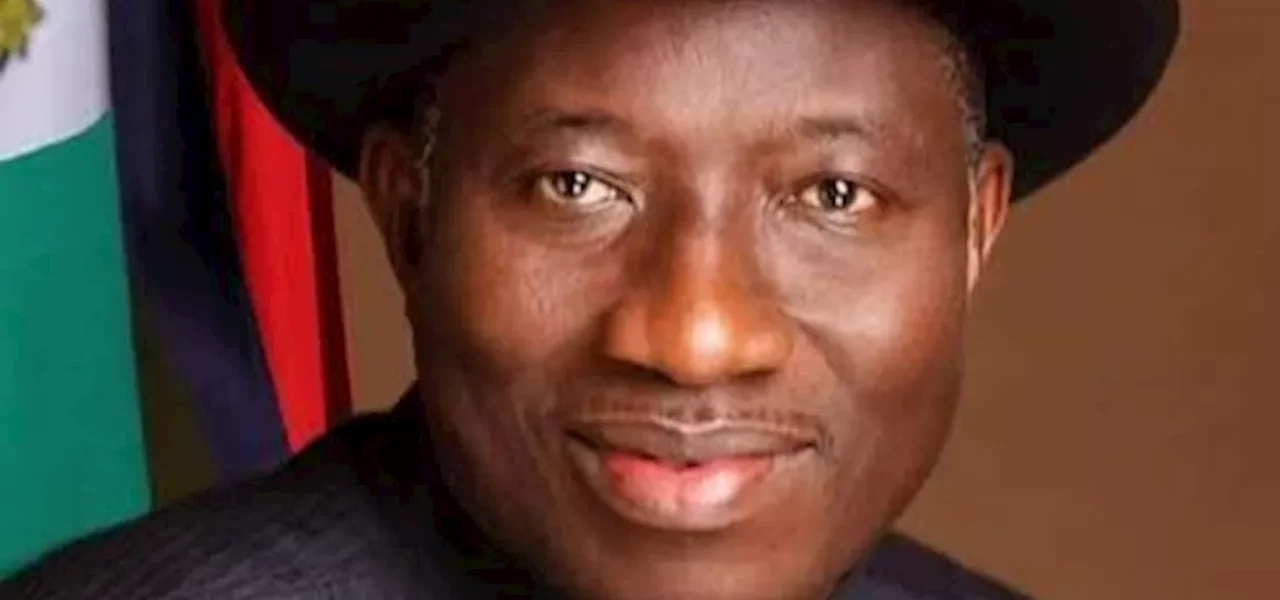
2027: Don’t choose leaders based on religion, ethnicity — Jonathan warns Nigerians

Former Nigerian President Goodluck Jonathan has urged Nigerians to stop choosing political leaders based on religion, ethnicity, language and other divisive considerations ahead of the 2027 general elections, stressing that competence and merit should determine who occupies public offices.
Jonathan gave the warning on Saturday, November 14, 2026, at the Herbert Macaulay Colloquium held in Lagos to commemorate the 162nd anniversary of the birth of the Nigerian nationalist and political pioneer.
The former president cautioned that Nigeria would continue to struggle with development if citizens failed to move away from identity-based political considerations and prioritise the ability of candidates to deliver effective leadership.
He described the practice of selecting political leaders based on religious, ethnic and linguistic affiliations as primitive, arguing that such considerations undermine the emergence of capable leaders.
Jonathan said political recruitment in Nigeria sometimes extended beyond the traditional Christian-Muslim divide, with differences between religious denominations also influencing leadership opportunities.
He cited an unnamed state in southern Nigeria where, according to him, belonging to a particular Christian denomination could determine an individual’s chances of becoming governor.
He maintained that Nigerians must embrace a political culture that gives qualified individuals equal opportunities to serve, regardless of their religious beliefs, ethnic backgrounds or languages.
Beyond leadership selection, Jonathan called for comprehensive reforms of Nigeria’s democratic system, describing the country’s existing democratic arrangement as opaque and amorphous.
He said democratic reforms should strengthen popular participation, the rule of law, respect for human rights, judicial independence, accountability, pluralism and civil society.
The former president also identified corruption, weak institutions, policy inconsistency, inadequate infrastructure and insecurity as major obstacles to Nigeria’s development.
On education, Jonathan emphasised the need for greater investment in functional education, research and innovation, urging the government to develop world-class universities capable of competing internationally.
Citing countries such as India, Singapore and South Korea, he said investment in quality education and research-driven institutions had contributed significantly to their technological and economic development.
He urged Nigeria to invest in its brightest minds and strengthen its educational institutions to improve national productivity and global competitiveness.
Jonathan also encouraged young Nigerians to draw inspiration from Herbert Macaulay and other founding nationalists, who worked towards building a united country beyond ethnic and religious divisions.
He said the most meaningful way to honour their contributions was to build a nation that reflected the ideals of unity, opportunity and national development for which they struggled.
His remarks come as political parties and prospective candidates begin preparations for the 2027 general elections, with leadership, national unity and governance expected to remain major issues in the country’s political discussions.

