Why France’s Ambassador to Ghana keeps facing questions about her loyalty

France’s Ambassador to Ghana, Diarra Dimé-Labille, has dismissed questions about her loyalty to France because of her Senegalese background, insisting that her responsibility as a diplomat is to serve the French government.
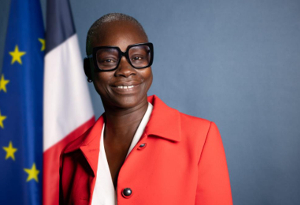 Speaking during an interview on TV3’s Today’s Woman programme on October 8, 2026, the ambassador revealed that she is frequently asked how she would respond if France and Senegal found themselves on opposing sides of an international issue.
Responding to the concerns, Dimé-Labille stressed that her professional responsibility was clear.
“I’m serving my country, and the country I’m serving is France. Otherwise, I wouldn’t be a civil servant,” she said.
The ambassador acknowledged that questions about her loyalty had arisen because of her Senegalese roots. She explained that although she was proud of her background, it should not be a reason to question her commitment to the country she represents.
She also recalled joking that she would relocate to Switzerland if she ever found herself caught between conflicting positions taken by France and Senegal.
However, she emphasised that the more important issue was how she could use her diplomatic position to strengthen relations between countries rather than continually defend her loyalty.
According to her, her personal background could serve as an advantage in promoting dialogue, understanding and cooperation between France and African countries.
“The most important thing is now to use that position and try to do whatever you can for the relationship between the two countries,” she said.
Dimé-Labille also called for clearer communication about France’s historical relationship with African countries and the direction of its future engagement with the continent.
She maintained that explaining France’s policies, building trust and encouraging constructive dialogue were more important priorities than repeatedly addressing questions about her allegiance.
The ambassador’s remarks come amid continuing discussions about France’s relationship with African nations, including historical grievances, economic cooperation and the future of diplomatic partnerships.
France has faced calls from African countries for a reassessment of historical relationships, particularly regarding colonialism, reparatory justice and the return of cultural artefacts.
Despite these challenges, France and Ghana have continued to pursue cooperation in areas including trade, education, health and security.
Dimé-Labille has reiterated her commitment to strengthening relations between France and Ghana, emphasising the importance of partnerships that benefit both countries.
Her comments highlight the challenges that diplomats with multicultural backgrounds can encounter when questions of national identity and international relations intersect.
For the ambassador, however, her position remains clear: her duty is to represent France while using her background and experience to foster stronger relationships with African countries.