
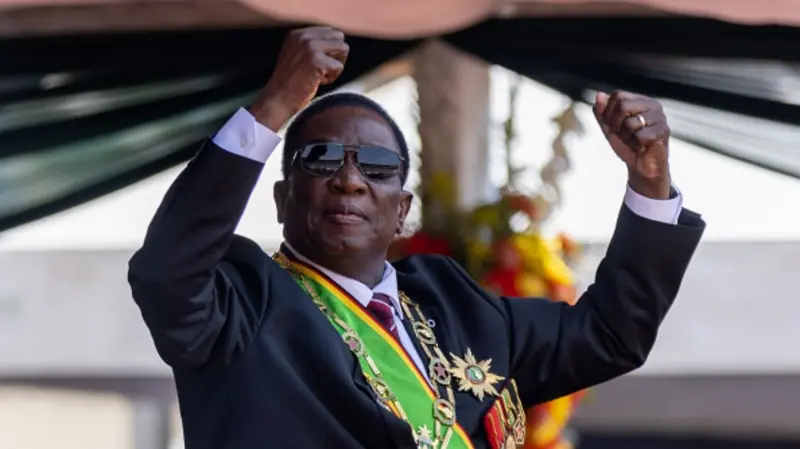
Zimbabwe’s 83-year-old President Mnangagwa Signs Law That Could Keep Him in Power Until 2030

Zimbabwe’s 83-year-old President, Emmerson Mnangagwa, has signed a new law that could allow him to remain in office until 2030, extending his time in power beyond the current constitutional term.
 The legislation has sparked intense political debate, with supporters arguing it will provide stability and continuity for the country’s development agenda.
However, critics and opposition groups say the move undermines democratic principles and could weaken constitutional term limits.
Mnangagwa, who has led Zimbabwe since 2017 after the removal of former President Robert Mugabe, has repeatedly faced criticism over governance, economic challenges, and electoral reforms.
The new law is expected to have significant political implications as Zimbabwe prepares for future elections, with observers closely watching how it will affect the country’s democratic process and political landscape.

