Ebola Cases Top 4,000 In DRC As WHO Urges Ervebo Vaccine Trial

The Democratic Republic of Congo (DRC) is facing one of its most serious Ebola outbreaks in history, with confirmed infections surpassing 4,000 and the death toll reaching about 1,850.
 According to the latest figures from Congolese health authorities, 4,053 confirmed Ebola infections have been recorded across five provinces — Ituri, North Kivu, South Kivu, Haut-Uele and Tshopo.
The outbreak, officially declared on May 15, is now considered the second-largest Ebola outbreak ever recorded, behind the 2014–2016 West African epidemic.
Health officials believe the virus may have been circulating for months before the outbreak was officially detected.
More than 500 suspected cases were recorded between January and May, raising concerns that the true number of infections could be higher than the confirmed figures.
The outbreak is being driven by the Bundibugyo strain of Ebola, a strain for which there is currently no approved vaccine. This has complicated efforts to contain the disease and protect people at high risk.
The World Health Organization and Africa Centres for Disease Control and Prevention are investigating why the outbreak has spread so rapidly and are studying whether changes in the virus could be contributing to its severity.
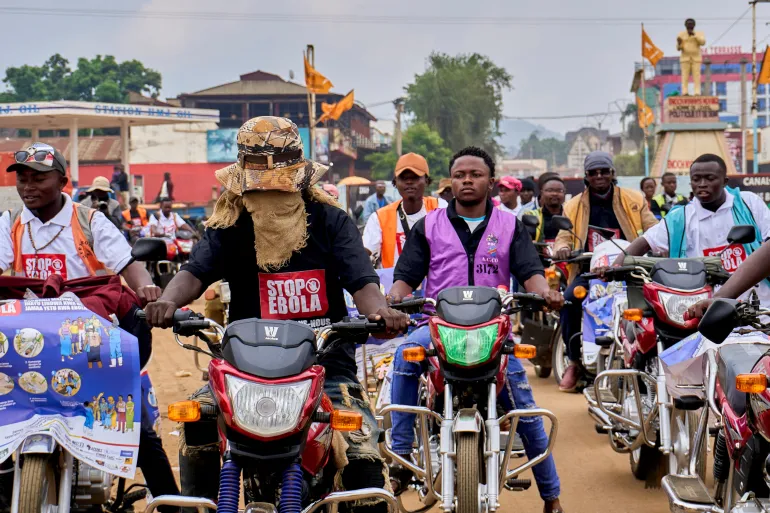
Officials are also shifting from traditional contact tracing to more aggressive community-based searches, including door-to-door identification of people showing Ebola symptoms.
A major concern is that many infections are occurring outside known transmission chains.
Health workers are struggling to identify enough contacts of confirmed patients, while conflict, population displacement and limited access to affected communities are making surveillance and treatment more difficult.
The situation has also raised questions about vaccination.
Ervebo, the licensed Ebola vaccine widely used in previous outbreaks, targets the Zaire strain and is not designed specifically for the Bundibugyo virus responsible for the current outbreak. Researchers have therefore been developing and testing a vaccine specifically targeting Bundibugyo Ebola.
The world’s first human clinical trial of a Bundibugyo Ebola vaccine began in July 2026.
The early-stage trial is designed to assess the vaccine’s safety and ability to generate an immune response among healthy volunteers.
Health authorities are also considering additional treatment options, including remdesivir, while continuing efforts to improve surveillance, community engagement and access to treatment centres.
Meanwhile, authorities remain concerned about the possibility of the virus spreading beyond the affected provinces.
A recent suspected Ebola-related death involving a passenger who travelled by boat toward Kinshasa prompted screening and precautionary measures, although seven passengers tested for Ebola were negative.
Officials say urgent international support is needed to strengthen the response, improve access to affected communities and prevent the outbreak from becoming even more difficult to control.