
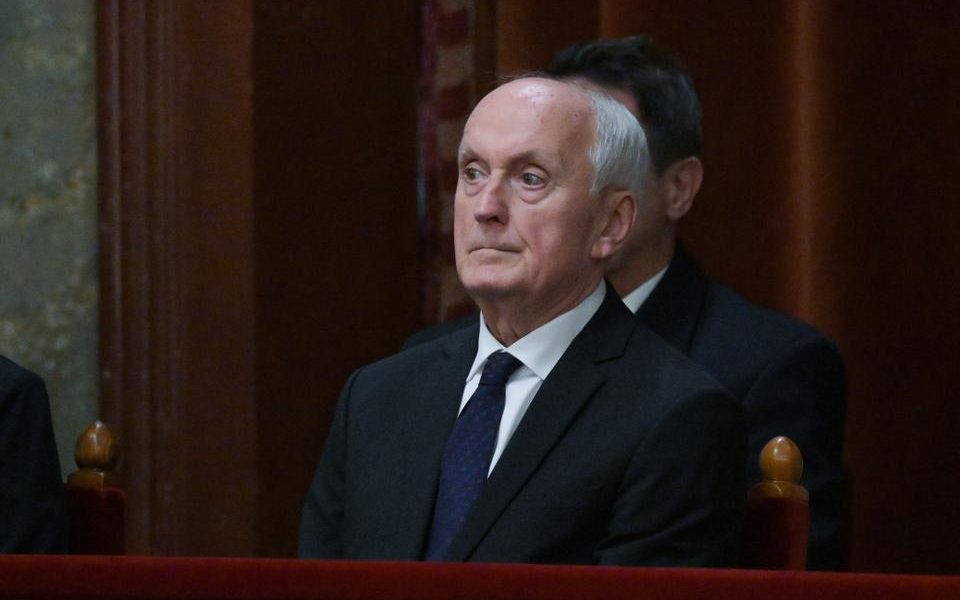
Former judge removed by Orbán elected Hungarian president

András Baka, a former president of Hungary’s Supreme Court, has been elected as the country’s new president, marking a significant development in Hungary’s political transition.
 Hungary’s parliament elected Baka on Tuesday, August 11, 2026, with 140 votes in favour and six against. Members of Viktor Orbán’s Fidesz party and its coalition partner, KDNP, boycotted the vote, arguing that the process was illegitimate.
Baka, 73, is a prominent Hungarian jurist who previously served as a judge at the European Court of Human Rights from 1991 to 2008. He became president of Hungary’s Supreme Court in 2009 but was removed from the position in 2011 after publicly criticising judicial reforms introduced under Orbán’s government.
His removal later became the subject of a major European Court of Human Rights case. The court ruled in 2016 that Hungary had violated Baka’s rights, finding that his early removal was connected to criticisms he had made about changes affecting the judiciary.
Baka’s election comes as Prime Minister Péter Magyar’s Tisza government attempts to dismantle or reform institutions associated with Orbán’s 16-year political era. The government has pursued changes involving the judiciary, media and other state institutions as part of its broader effort to restore checks and balances.
In his speech following the election, Baka called for national unity and warned against using political change as an opportunity for revenge. He stressed the importance of justice, democratic values and representing all Hungarians.
Baka is expected to formally assume the presidency on August 19, 2026. Hungary’s presidency is largely ceremonial, but the president has constitutional responsibilities including reviewing legislation and representing the country.
His election is therefore being viewed as more than a routine change of president. Given his history with the Orbán government and his previous defence of judicial independence, Baka’s return to a prominent state position carries considerable symbolic significance as Hungary enters a new political period.
