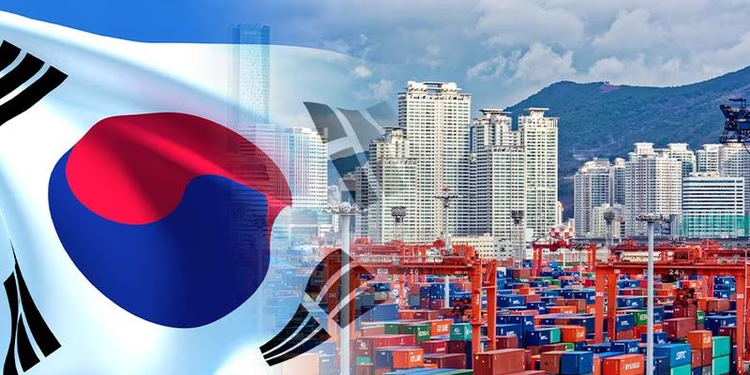
How South Korea Rose from Poverty to a Global Economic and Cultural Powerhouse

In 1960, South Korea was one of the poorest countries in the world, with an economy largely dependent on agriculture.
 At the time, its income per person was lower than that of several African countries, including Ghana. The country was still recovering from the devastating Korean War, which had destroyed much of its infrastructure and left millions living in poverty.
 Determined to rebuild, South Korea embarked on an ambitious development strategy focused on education, industrialisation and export-led economic growth. The government invested heavily in schools, technical training, roads, ports and electricity while encouraging local companies to compete in global markets.
 Over the following decades, South Korean firms such as Samsung, Hyundai, LG and SK Group grew into world-leading brands. The country became a major producer of electronics, automobiles, semiconductors and some of the world’s most advanced ships, transforming its economy into one of the strongest in Asia.
South Korea also emerged as a global cultural force through the “Korean Wave,” or Hallyu. K-pop groups like BTS and BLACKPINK, award-winning films such as Parasite, and hit television dramas including Squid Game gained massive international audiences, making South Korea a leading exporter of entertainment and culture.
Today, South Korea is recognised as one of the world’s most advanced economies, known for its innovation, technology, education and manufacturing excellence. Its remarkable transformation from a war-torn, low-income nation into a global economic and cultural powerhouse is widely regarded as one of the greatest development success stories in modern history.