

How planning failures, conflicting government approvals, new developments put lives, investments at risk
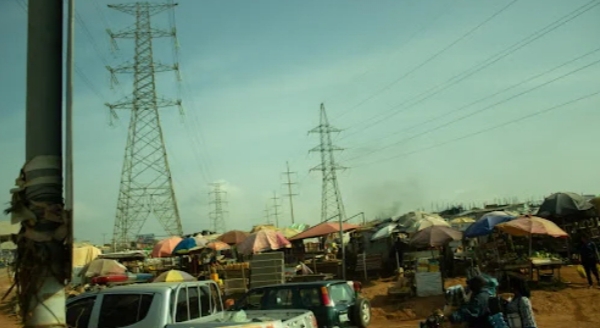
 For more than two decades, pupils of Clementine Schools in Agbado Oke, Lagos resumed each morning beneath the shadow of twin high-voltage electricity transmission lines.
Parents dropped off their children, teachers conducted lessons and school activities continued without any indication that the buildings stood within a restricted corridor.
Then, one morning, the bulldozers arrived.
Within hours, classrooms that had nurtured generations of children were reduced to rubble.
Desks, books and equipment lay buried beneath broken concrete. The proprietress, Mrs. Clementine Adegoroye, watched helplessly as decades of investment disappeared before her eyes.
Months later, she says she still struggles to understand what happened next. According to her, portions of the same land from which her school was removed are now occupied by shops.
“If government said my school was demolished because it was under the power lines, why are shops now standing there?” she asked.
Her question lies at the heart of a troubling pattern uncovered by Sunday Vanguard during months of investigation across parts of Lagos.
Although federal and state authorities have consistently warned that living or carrying out business beneath high-voltage electricity transmission lines poses serious safety risks, fresh commercial developments continue to emerge within some of the same corridors after demolition exercises with millions of people operating there.
Many affected residents and business owners insist they bought land from recognised owners, obtained planning approvals or occupied properties that had existed for decades without objection from government agencies.
The conflicting claims raise difficult questions about planning approvals, enforcement, public safety and accountability. Who approved the developments? Why were demolitions carried out only after people had invested their life savings? If the corridors are unsafe for homes, schools and churches, why do fresh commercial structures continue to appear on some of the same sites?
Planning approval
Mrs. Adegoroye insists she did not knowingly build illegally.
The 70-year-old educationist said she bought the land from a private owner who had earlier acquired it from the traditional landowners.
Before construction began, she said, she conducted a survey and obtained planning approval for both the primary and secondary school buildings.
When officials first marked the school for demolition, she said she was directed to the State Secretariat at Alausa, where she presented her documents.
According to her, consultants later visited the property, measured the setback from the transmission lines and subsequently informed her that the school complied with the required safety distance.
“They checked my school building. It was in-between two power lines with the minimum spacing met. They assured me the building would not be affected,” she recalled.
Emotional and financial impacts
That assurance, she said, proved worthless.
According to her, demolition commenced shortly after the inauguration of a new chairman of Agbado Oke-Odo Local Council Development Area, LCDA.
“I was not allowed to remove anything. My staff only managed to rescue the WAEC certificates. Everything else was destroyed or looted,” she lamented.
“They have turned me into a tenant in my seventies. My students scattered because I could not immediately secure another place. It feels as though I am starting life all over again.”
