Musk Resigns from U.S. Government Role, Criticises Trump’s Spending Bill

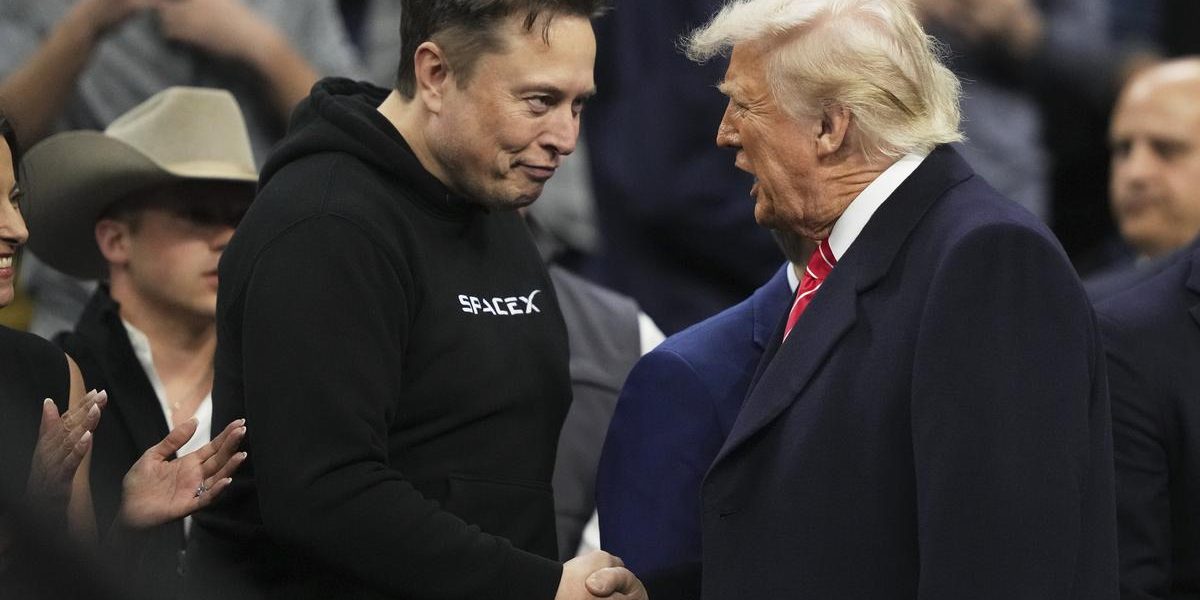
Billionaire tech mogul Elon Musk has announced his resignation from the U.S. government, citing disagreements with President Donald Trump’s spending plans and expressing disappointment over rising budget deficits.

Musk, who served as head of the Department of Government Efficiency (DOGE), said on Wednesday that his time as a Special Government Employee had ended. He made the announcement on his social media platform, X.
“As my scheduled time as a Special Government Employee comes to an end, I would like to thank President Donald Trump for the opportunity to reduce wasteful spending,” Musk posted.
He added that the DOGE initiative, created to cut down government expenses, “will only strengthen over time as it becomes a way of life throughout the government.”
Musk’s resignation comes shortly after he publicly criticised President Trump’s newly passed “One Big, Beautiful Bill Act” — a major legislation offering tax breaks and deep spending cuts. Musk argued the bill would increase the U.S. deficit, undermining DOGE’s mission, which had already led to massive downsizing in the federal workforce.
Speaking in an interview with CBS News, Musk said: “I was disappointed to see the massive spending bill, frankly, which increases the budget deficit, not just decreases it, and undermines the work that the DOGE team is doing.”
He further told The Washington Post that DOGE had become the scapegoat for broader public dissatisfaction with the Trump administration.
“DOGE is just becoming the whipping boy for everything,” Musk said from SpaceX’s Starbase site in Texas. “Something bad would happen anywhere, and we would get blamed for it even if we had nothing to do with it.”
The White House responded through Trump’s Deputy Chief of Staff, Stephen Miller, who downplayed the controversy.
“The Big Beautiful Bill is NOT an annual budget bill,” Miller wrote on X. He explained that any spending cuts from DOGE would require a separate bill, in line with Senate procedures.
Musk, who played a key role in Trump’s 2024 return to office by being the largest donor to his campaign, was earlier seen as a close ally of the president. However, he began stepping back from DOGE in April to refocus on his private companies, SpaceX and Tesla.
Musk blamed entrenched bureaucracy and resistance in Washington for DOGE’s limited success.
“The federal bureaucracy situation is much worse than I realized,” he said. “It’s an uphill battle trying to improve things in D.C., to say the least.”
Despite cost-cutting measures that led to tens of thousands of government layoffs and the closure of multiple departments, Musk admitted the reforms didn’t achieve all their objectives.
Meanwhile, Tesla faced backlash from the public. Some dealerships were targeted by protesters, and a few electric cars were reportedly set on fire. The company also recorded a drop in profits.
“People were burning Teslas. Why would you do that? That’s really uncool,” Musk lamented.
He has also been grappling with setbacks at SpaceX. On Tuesday, the company’s Starship prototype exploded over the Indian Ocean, marking another delay in Musk’s vision of sending humans to Mars.
The billionaire recently hinted that he would be reducing his financial involvement in U.S. politics, after spending roughly $250 million to support Trump’s campaign.