
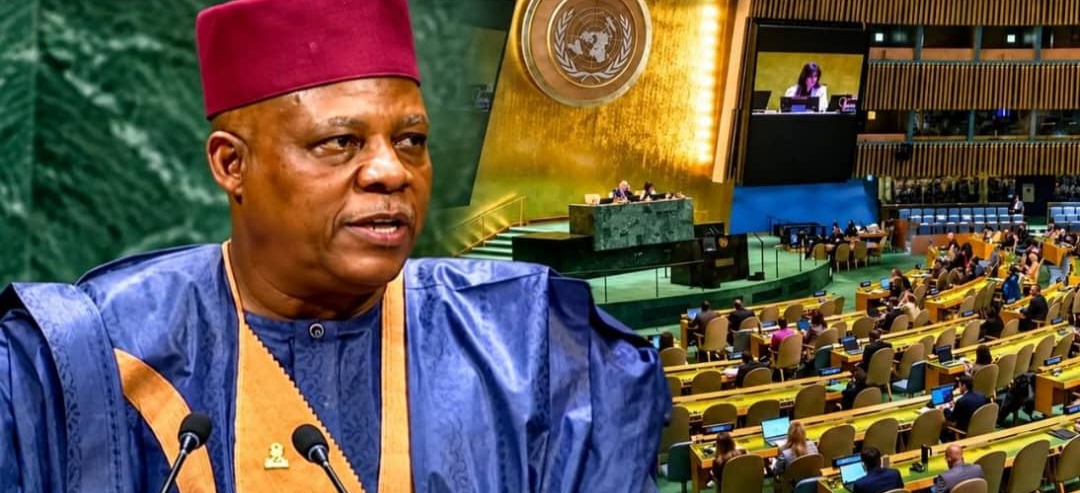
Nigeria Demands Two Permanent Un Security Council Seats, Veto Power For Africa

Nigeria has renewed its call for the reform of the United Nations Security Council, demanding at least two permanent seats for Africa with full membership rights, including veto power for as long as the veto remains in existence.
 Vice President Kashim Shettima made the demand on Thursday while delivering President Bola Tinubu’s national statement at the 81st United Nations General Assembly in New York.
Shettima said the current structure of the Security Council no longer reflects the realities of the modern world, arguing that the international body should move beyond the power distribution established in 1945.
He said Africa should no longer remain without permanent representation while issues affecting the continent continue to feature prominently on the Security Council’s agenda.
Nigeria called for at least two permanent African seats, with the same rights and responsibilities enjoyed by existing permanent members, including veto power for as long as the veto exists. It also demanded five non-permanent seats for Africa.
The demand is consistent with the Ezulwini Consensus and Sirte Declaration, which form the African Union’s common position on reform of the Security Council. Under that position, Africa seeks two permanent seats and five non-permanent seats on an expanded Council.
The UN Security Council currently has 15 members — five permanent members and 10 non-permanent members. The permanent members are China, France, Russia, the United Kingdom and the United States, all of which possess veto power. Africa currently has no permanent seat.
Nigeria’s renewed demand comes amid broader calls from African leaders and the UN Secretary-General for changes to the Council to make it more representative of the contemporary international system.
However, Security Council reform remains unresolved. Changing the Council’s permanent membership would require an amendment to the UN Charter, including approval by two-thirds of the General Assembly and ratification by two-thirds of UN member states, including all five existing permanent members.
Shettima also reaffirmed Nigeria’s commitment to multilateralism, international law and the peaceful settlement of disputes, while calling for greater international cooperation to address conflicts, terrorism, organised crime and other global challenges.
Nigeria’s position places the question of Africa’s representation at the centre of its diplomatic agenda as negotiations over reform of the Security Council continue.
