
Nigeria targets global creative economy through stronger trade, investment

 Nigeria is seeking to strengthen its position in the global creative economy through increased trade, investment, research and development, as the Federal Government moves to harness the country’s creative talents to drive economic growth, create jobs and attract investment.
Vice-President Kashim Shettima said the government was working to strengthen the creative industry through collaboration among relevant ministries, improved protection of intellectual property and wider access to opportunities for creative industry operators.
Speaking at the opening ceremony of Afreximbank’s CANEX Weekend 2026 in Lagos, Shettima said the initiative provided Nigeria and the wider African continent with an opportunity to position themselves as stronger competitors in the global creative economy.
He called for stronger cooperation among African countries to break geographical and economic barriers, facilitate the exchange of ideas and enable creative businesses to expand across borders. He said Africa must build on its talents, history, culture and creative potential to improve its competitiveness in international markets.
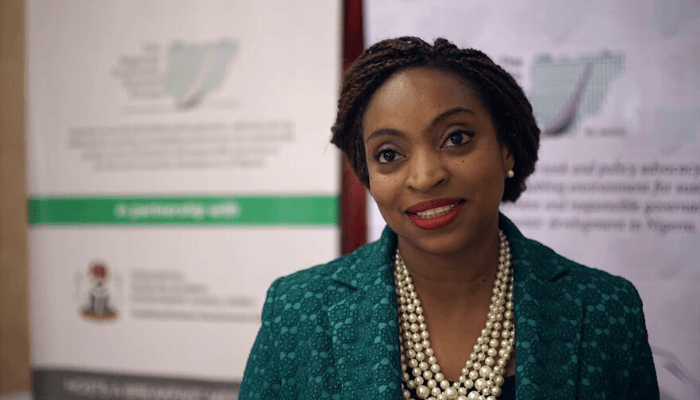
Jumoke Oduwole, Minister of Industry, Trade and Investment, said Nigeria’s participation in CANEX was part of a broader strategy to attract investment into its creative industries and ensure that more economic value from the sector remained within the country.
Oduwole said Nigeria’s creative industry had grown significantly over the past two decades, with Nigerian musicians and filmmakers achieving international recognition, but argued that the country needed to strengthen the business structures that enable creators and investors to benefit financially from that success.
She cited the investment in Mavin Records by Kupanda Capital and TPG Group in 2019, followed by Universal Music Group’s acquisition of a majority stake five years later, as an example of how institutional investment could generate returns in the creative economy.
According to her, while many Nigerians are familiar with the music industry’s successes, fewer understand the investment opportunities and business transactions behind them.
“Yet, we need more of that profit to stay in the hands of more of our creatives right here at home,” she said.
Oduwole said the Federal Government had taken several steps to strengthen the investment environment, including Nigeria’s appointment in February 2025 as co-champion of the African Continental Free Trade Area (AfCFTA) Protocol on Digital Trade.
She explained that the development would support cross-border trade in creative services, including music licensing, film distribution and production services delivered by Nigerian studios to clients across Africa.
She also disclosed that the Federal Executive Council approved Nigeria’s first National Intellectual Property Policy and Strategy in November 2025 to help creators protect their work and generate income from their intellectual property.
In addition, the government unveiled its Creative Sector Investment Playbook at the World Economic Forum in Davos in January 2026 to guide investors on opportunities in the sector.
Oduwole said the Federal Government was unlocking more than $600 million in financing for digital and creative enterprises under the Investment in Digital and Creative Enterprises (iDICE) programme.
She added that hosting CANEX in Lagos was intended to attract global attention and investment to Nigeria’s creative industry, particularly in technology, infrastructure and enterprise development.
George Elombi, president of Afreximbank, said Africa’s creative industry was generating global attention but failing to retain a commensurate share of the economic value because critical aspects of the business, including distribution, branding, marketing and intellectual property ownership, remained largely outside the continent.
He said Africa’s creative economy was estimated at about $60 billion but accounted for only about two percent of the global creative industry, despite the international reach of its music, films, fashion, literature and cultural products.
“Too often, the African creators make the hits, and someone else makes the money,” Elombi said, arguing that foreign ownership of distribution platforms, music catalogues and intellectual property was limiting the financial returns available to African creators.
He said financing production alone would not address the problem, stressing the need to invest across the entire creative value chain, particularly distribution, branding, marketing, logistics and intellectual property management.
Elombi said Afreximbank had increased its creative economy financing commitment to $2 billion after earlier funding allocations proved insufficient to meet the sector’s needs.
He disclosed that the bank was also supporting the development of creative infrastructure and had launched the Pan-African Film Fund to finance film production and distribution.
The Afreximbank president further called on African governments to sustain investment in the creative sector, warning against cutting cultural budgets during periods of fiscal tightening.
He urged creators to register their intellectual property and maintain verifiable records of their earnings to improve their ability to access financing.
“The right that is not owned cannot be financed, and the royalties no one can audit cannot be priced,” he said.
Elombi said Afreximbank would continue to support the development of Africa’s creative industry by financing businesses and infrastructure across the sector, adding that the bank intended to serve as a financial partner and advocate for the continent’s creative economy.
