
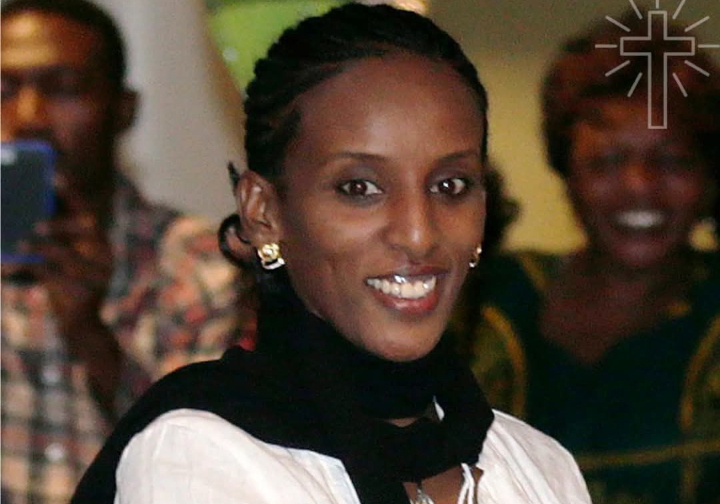
SUDANESE CHRISTIAN WOMAN SENTENCED TO DEATH AFTER REFUSING TO RENOUNCE HER FAITH

In 2014, the case of a Sudanese Christian woman, Meriam Yahya Ibrahim Ishag, sparked international outrage after a court in Khartoum sentenced her to death for apostasy and ordered that she receive 100 lashes for adultery.
 Ibrahim, who was 27 years old at the time, was raised as a Christian by her Christian mother after her Muslim father was absent. She had married Daniel Wani, a Christian man from South Sudan, but the Sudanese court considered the marriage invalid under the country’s interpretation of Islamic law. She was subsequently convicted of apostasy and adultery.
During the court proceedings, Ibrahim was reportedly given an opportunity to renounce Christianity and return to Islam. She refused and maintained that she was a Christian. The court subsequently imposed the death sentence, with the execution to take place after she gave birth.
While imprisoned at Omdurman Women’s Prison in Khartoum, Ibrahim gave birth to a baby girl, Maya, on May 27, 2014. She was also being held with her young son, Martin.
After her release, Ibrahim described the circumstances surrounding the delivery. She said her legs had been shackled and that she was unable to properly open her legs during childbirth, requiring prison staff to help lift her. She expressed concern that the circumstances surrounding the birth might affect her daughter’s ability to walk in the future.
Her case generated widespread international condemnation from human-rights organizations, governments and religious groups. Amnesty International described the sentence as abhorrent, while international campaigners called for her immediate release.
In June 2014, an appeals court overturned the death sentence and released Ibrahim. However, shortly afterward, she and her family were detained at Khartoum airport while attempting to leave Sudan. The family was eventually allowed to depart, and in July 2014 Ibrahim arrived in Rome with her husband and children before continuing toward the United States.
The case became a widely cited example in discussions about religious freedom, women’s rights and the treatment of religious minorities under Sudan’s former legal system.
Note: The image’s statement that she simply “said ‘I am a Christian’ and was sentenced to die” captures the central part of the case, but the full story also involved the adultery conviction, her pregnancy, imprisonment, childbirth and the eventual overturning of the death sentence.

