World Bank Highlights Ai-driven Trade Growth, Critical Minerals And Digital Services At Development Committee

The World Bank Group has highlighted the changing landscape of global trade, emphasizing the growing role of artificial intelligence (AI), digital services and critical minerals in driving economic growth and creating new investment opportunities in developing countries.
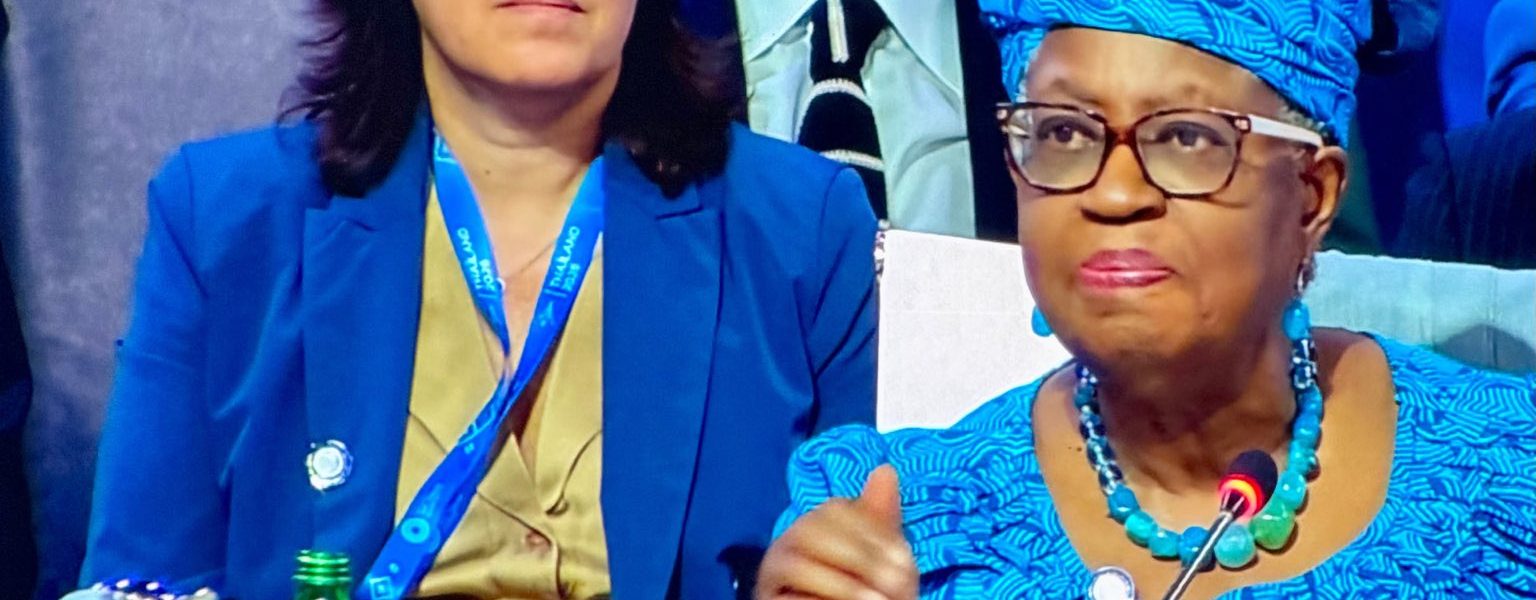
 At the World Bank Group’s Development Committee, ministers responsible for finance and development cooperation were briefed on recent developments in global trade, including the latest growth projections and the increasing contribution of AI-related products and services.
The World Trade Organization (WTO) recently raised its forecast for global merchandise trade growth in 2026 to 3.9 percent, up from its earlier projection of 1.9 percent. The stronger outlook has been supported largely by surging demand for AI-related products such as semiconductors and data-centre equipment.
The discussion also focused on how AI could reshape international trade by lowering costs, improving productivity and expanding opportunities in digitally delivered services. The WTO estimates that AI-related products accounted for a significant share of recent trade growth and projects that AI could substantially increase global trade over the coming years.
Another major area highlighted was the opportunity to channel private investment into critical minerals and other strategic value chains. World Bank Group President Ajay Banga said the institution plans to quintuple its critical-minerals business over five years, targeting about $19 billion in financing between fiscal years 2026 and 2030, compared with $3.6 billion during the previous five-year period.
The World Bank is also working with countries to develop local processing, infrastructure, skills and supply chains so that mineral-rich economies can retain more jobs and economic value rather than simply exporting raw materials. Eight countries—Argentina, Bolivia, Egypt, India, Kazakhstan, Malawi, Mauritania and Zambia—recently launched partnerships and compacts aimed at strengthening their metals and minerals sectors.
World Bank
The briefing further highlighted the World Bank Group’s growing ability to mobilize private-sector financing. The institution mobilized a record $112 billion in private capital in fiscal 2026, more than three times the $35 billion mobilized in fiscal 2022. Combined with the Group’s own financing, total financing and mobilization exceeded $230 billion during the year.
Africa was among the regions seeing significant growth, with private capital mobilization increasing from about $9 billion in fiscal 2022 to $22 billion in fiscal 2026. However, the World Bank acknowledged that attracting private capital to low-income and fragile economies remains a major challenge.
World Bank
The meeting also provided an update on efforts to reform the WTO and ensure that global trade rules keep pace with changes in technology, digital commerce, artificial intelligence and global value chains. The WTO has acknowledged that its rules, many of which were developed before the rise of the internet and modern AI, need to adapt to today’s increasingly digital and interconnected economy.
World Trade Organization
Overall, the discussions underscored the need for stronger cooperation between governments, development institutions and private investors to turn technological advances, critical minerals and digital services into sustainable economic growth, jobs and broader opportunities across developing economies.