

Governor Alex Otti has announced that Abia State is now free from Nigeria’s repeated national grid collapse which always leads to power outages across the country.
Otti m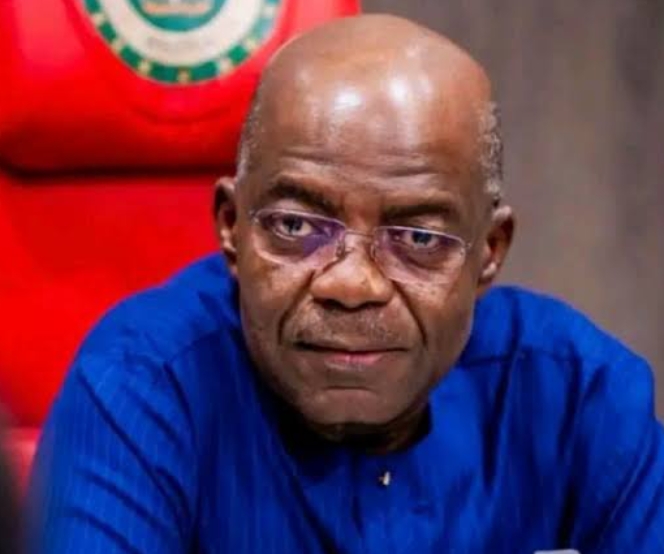 ade the announcement on Thursday while addressing journalists at the Abia State Government House in Umuahia, attributing it to new investments in renewable energy generated from organic waste.
The governor stated that his administration has begun converting waste materials into biogas, which is then used to generate electricity for residents.
According to him, the development effectively means that Abia State is no longer under the regulatory control of the Nigerian Electricity Regulatory Commission (NERC).
Otti told journalists that the new power arrangement has been successfully negotiated with and accepted by the Enugu Electricity Distribution Company (EEDC), which oversees electricity distribution in Abia State.
“This is a pilot programme. Instead of throwing away waste, we can turn it into clean energy, and we will be able to power a lot of places, particularly the Umuhaia in-farms,” he said.
“I had reported earlier that our offers to EEDC have been accepted, and we are in the process of raising the funds to pay off EEDC.
“On the 24th of December, the Abia state electricity regulation authority took over the regulation of power from the Nigerian Electricity Regulatory Commission. So everything about distribution, generation, and transmission is going to be regulated within the state.
“The whole idea is to ensure regulation of efficiency and independence in the state, just like the Aba Power provides power for the Aba in-farms.
“I am sure you would have been aware that some of the disasters (national grid collapses) that happened recently, our state was not affected, because a whole part of our power assets is within our authority.
“That is the whole idea of acquiring the whole Umuahia in-farms. I am happy we are making a lot of progress in that regard.”
Recall that Nigeria’s national grid suffered another system collapse on Tuesday, January 27, plunging several parts of the country into darkness just four days after the first major outage of 2026.
Data from the Nigerian Independent System Operators (NISO) grid performance dashboard showed that real-time electricity generation dropped sharply to 39 megawatts (MW) as of 11:00 a.m last Tuesday, with supply coming from only one generating company. Several other power plants on the dashboard recorded zero output at the time of the disturbance.
Simultaneously, distribution load allocation figures indicated that power supply to electricity distribution companies (DisCos) nationwide fell to 0.00MW, confirming a widespread grid failure.
The first national grid collapse this year occurred on Friday, January 23, 2026, with real-time data showing total generation falling to 0.00 megawatts, plunging large parts of the country into darkness.
