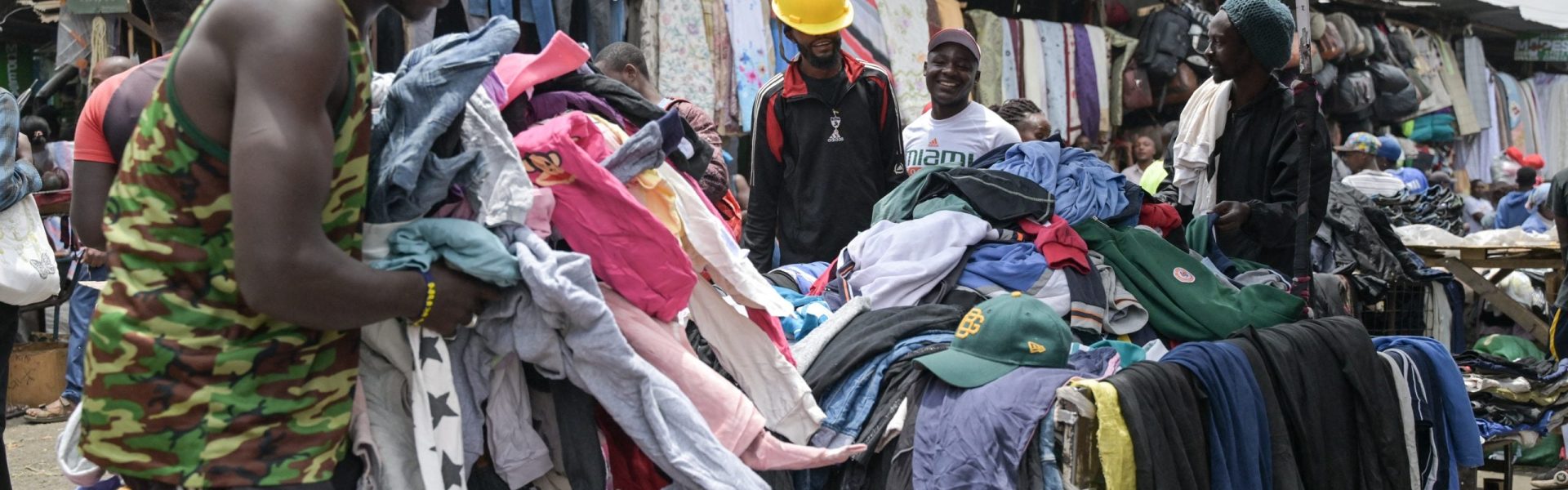

Zimbabwe’s ban through Statutory Instrument (SI) 59 of 2026 was put in place as a policy intervention to facilitate the recovery of its almost-dormant textiles and clothing manufacturing sectors, even though similar protectionist policies have not worked in the East African Community (EAC).
A legitimate policy?
The Zimbabwe manufacturing sector’s share of the GDP collapsed from nearly 20% in 1990 to around 7% by 2024. Protecting the recovery of the textile industry is key to its survival, says economist Tafadzwa Mupingashato, a research fellow at the University of South Africa (UNISA).
“David Whitehead Textiles in Kadoma and Chegutu stands to be the primary beneficiary of the policy if the ban on second-hand clothes holds, as the company is receiving $20m in fresh capital,” Mupingashato tells The Africa Report.
The once vibrant company has been struggling since 2002 due to debts, ageing equipment and competition.
Truworths shuts in Zimbabwe due to second-hand clothing market
The textile industry was once among the largest employers in Kadoma. When they shut down, cotton output, which feeds the spinning and weaving value chain, plummeted from the peak of 300,000 tonnes in the 1990s to under 80,000 tonnes in recent years.
However, there has been incremental improvement, says Mupingashato. “It is against that backdrop that the government framed SI 59 of 2026 as a necessary intervention.”
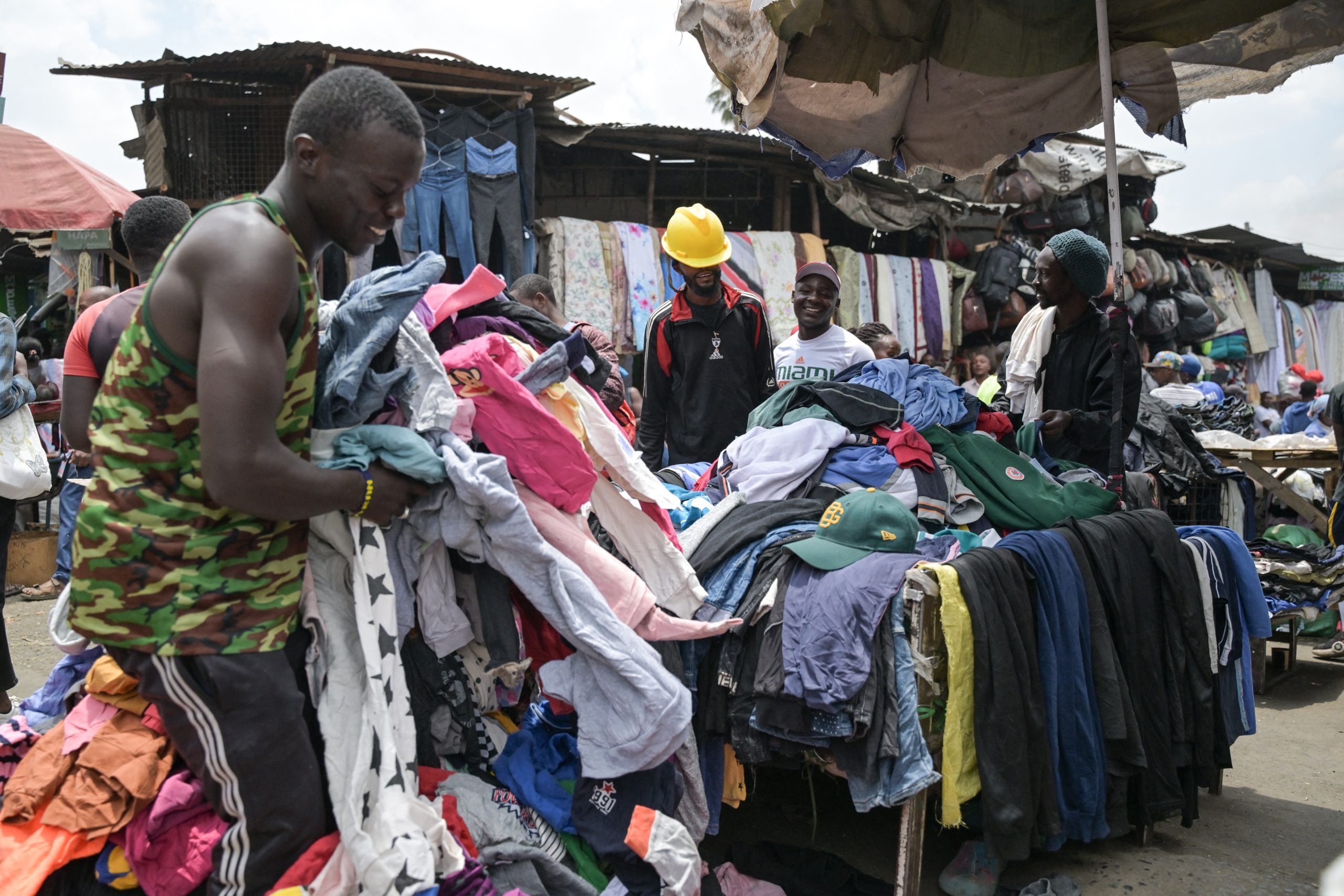
With a staggering $10bn import bill, Zimbabwe’s imports of second-hand clothes (mabhero) stood at $31m in 2024, while new clothing imports from China were $1.37m, according to UN Comtrade data.
“That is a 22-to-1 gap. When you remove second-hand clothes, that gap becomes a supply vacuum that domestic manufacturers cannot fill,” he says.
The ban does not affect cheap imported Chinese clothing.
Lessons from the rest of Africa
Zimbabwe is not the first country in Africa to pursue this policy, but political pressure, heavy reliance on second-hand clothes by low-income earners, and retaliation internally and by suppliers of these used clothes in developed countries derailed the initiative.
How Zimbabwe’s informal ‘tuckshops’ toppled a retail empire
Some countries in the EAC collectively pledged in 2016 to phase out second-hand clothing imports by 2019, but only Rwanda followed through with the policy.
Kenya, Uganda, Tanzania and Burundi reversed the decision under US pressure linked to the African Growth and Opportunity Act (AGOA). But Rwanda raised import tariffs on second-hand clothes from $0.20 per kilogramme to $2.50 and eventually $4, effectively prohibiting imports.
“The US responded by suspending Rwanda’s AGOA preference, costing the country significant apparel revenue. Rwanda endured this because it had a dominant political settlement that could absorb popular resistance,” says Mupingashato.
Rwanda paired the ban with targeted value-added tax (VAT) and import duty exemptions for textile investors and had a long-term vision of moving from a low-income to middle-income status that it was willing to compromise.
Ghana: Report says global north’s fast fashion fuelling environmental crisis
For Rwanda, the results are mixed. After the ban on second-hand clothing imports, domestic production was modestly increased, but clothing prices did not fall immediately, he says.
“Women in the informal sector lost their livelihoods, and second-hand clothing imports still crept back through Uganda, which re-exports to Rwanda through EAC’s customs union. By 2023, Rwanda was still recording $664,000 in worn clothing imports despite the ban.”
Kenya and Uganda backed down and reversed the policy, not because it was wrong in principle, but because they lacked the political insulation to sustain the short-term costs.
“Kenya had approximately $340m in apparel exports to the US under AGOA – too large a risk to absorb. Uganda’s informal vending sector, like Zimbabwe’s, was too politically exposed to permit an unpopular enforcement campaign.”
Kenyan Economist and University of Nairobi professor XN Iraki tells The Africa Report that Kenya has not banned the imports of second-hand clothing (mitumba).
“It is among the top importers in Africa. For countries that have banned second-hand clothes, it makes economic sense. One, it is about dignity: wearing clothes worn by someone [else] is undignified. Two, we could have fewer low-income earners if we developed textiles, like Korea and China,” Iraki says.
Will the ban work in Zimbabwe?
Analysts say the used-clothes ban can only work if local production can meet demand. If implemented, the policy will benefit local clothing manufacturers that have been struggling, as well as sectors in the clothing supply chain, from cotton producers to garment manufacturers, says economist Titus Mukove.
They will have problems trying to police people who will still be selling second-hand clothes
“There is going to be increased demand for cotton from producers, and this will revitalise the sector that has faced several challenges for years due to second-hand clothing imports. Textile manufacturers will benefit and local manufacturers might increase production to meet demand. We will be able to see the growth of the formal sector,” he adds.
Mukove warns that industry players in the country still face challenges like outdated machinery and high costs of production, which may go against the possible benefits of the import ban.
It will be low-income urban households that will feel the negative impacts of the ban because they rely on the used clothing trade.
Why Zimbabwe’s low inflation still won’t fill dinner plates
“For ordinary citizens, there is going to be a negative impact mainly because it is informal traders who rely on the sale of used clothing. Low-income earners are unable to purchase new, expensive clothing,” says Mukove.
“A balanced approach to the ban combined with protectionism of local industries will assist in formalising the sector,” he says, adding that they will need some government support.
A complete phase out of used clothing means the country needs to have a vibrant clothing industry producing clothes at a large scale, says economist Trust Chikohora.
“The ban could create a huge gap in the economy and GDP because there are no industries to talk about. It could be a flawed policy, and we might need to reverse that,” he says, especially if nothing is put in place to help those transition from the used-clothing business to another livelihood.
“They will have problems trying to police people who will still be selling second-hand clothes,” Chikohora says.