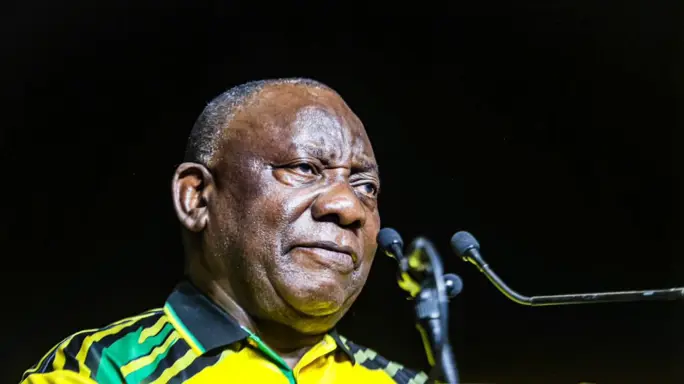
President Cyril Ramaphosa dreams that the MyMzansi digital platform will allow South Africans to access all digital government services under “one roof,” but this dream is now growing dimmer.
A new report from the Development Bank of Southern Africa explained why most South Africans will still not be able to practically use the upcoming platform when it launches, slated sometime after 2030.
During his 2026 State of the Nation Address, Ramaphosa said that the platform will “digitise driver’s licenses, matric certificates and services at the Master’s Office.”
“Citizens will be able to fill out police statements online, and eligibility for SASSA grants can be tested remotely,” he said. MyMzansi’s overall plan is to allow all South Africans, with a focus on the poor and those living far from government service centres, to access government digital services.
The main barrier to the platform achieving this, according to the report, is the shift from broad connectivity to what it terms “meaningful connectivity.”
While South Africa achieved significant network penetration, with 99% of the population reportedly covered by 4G mobile internet, the problem now lies in access.
“Connectivity alone does not guarantee meaningful participation in the digital economy,” the report stated.“Particularly where macroeconomic constraints limit households’ ability to afford devices and broadband services.”
The report cited a nationally representative GIS-based Household Affordability Model, suggesting that current income and expenditure patterns are insufficient to afford always-on broadband Internet.
Even at a baseline price point of R300 per month, “more than 50% of households would be unable to afford such connectivity in a scenario characterised by economic decline.”
While the plan is for MyMzansi to be zero-rated, meaning it will not cost mobile data to access the platform and use its services, getting smartphones into people’s hands remains a challenge.
Compared with countries like Kenya, Brazil, and Thailand, the report said South Africa’s mobile service and handset prices appear higher — a key constraint to uptake.
In April 2025, communications minister Solly Malatsi scrapped the 9% luxury goods tax on smartphones priced under R2,500, leading to a 16% increase in first-time buyers.
The success of the tax cut may be short-lived, however, as the global memory crisis driven by the over-demand of AI companies pushes up prices on all computing devices, including smartphones.
“AI infrastructure boom has now rippled outward, with tightening memory supply, inflating prices, and reshaping product and pricing strategies,” the IDC reported.
“For consumers and enterprises alike, this signals the end of an era of cheap, abundant memory and storage, at least in the medium term.”
The smartphone and PC markets are already bracing for higher costs, with Intel reportedly planning to raise CPU prices by 10% in April 2026.
“Affordability of devices is a key barrier to entry for many low-income users,” the report reads. “The cost of a low-end smartphone may cost close to 20% of the national monthly minimum wage.Aside from the barriers posed by the devices that South Africans need to access the MyMzansi platform, another major hurdle lies within government systems.
The MyMzansi platform requires a system that reflects the “one government” agenda, meaning all government departments will centralise digital services on the platform.
It states that achieving the MyMzansi vision depends on several minimum criteria, one of which is the establishment of digital connectivity infrastructure between physical branches.
“All regional/citizen-facing government facilities need suitable Internet connectivity to both access digital public infrastructure (DPI) services and to offer DPI services to the public,” it said.
“However, the DPI initiative will not have the impact it desires if government facilities are not connected to suitable high-speed broadband.”
An example is for health facilities across the country, which experience “vastly different connection speeds,” representing a stark digital divide in this industry alone.
One of the biggest concerns raised by the report was that the South African government required an investment of between R108 billion and R142 billion to close this digital divide.
However, this investment will not automatically translate into the full functioning of the MyMzansi platform, nor guarantee that citizens use it.
The report indicated that the investment must be rolled out together with government interventions that lower barriers to entry for end users.
A few recommendations in the report included zero-rating all gov.za platforms, finalising a free basic data allowance for South African households, and expanding digital literacy in the country.