
FG rules out petrol price controls, backs market pricing amid Middle East tensions

The Federal Government has reaffirmed its commitment to market-based petrol pricing, insisting it will not introduce price controls despite rising geopolitical tensions in the Middle East that have heightened volatility in global oil markets.
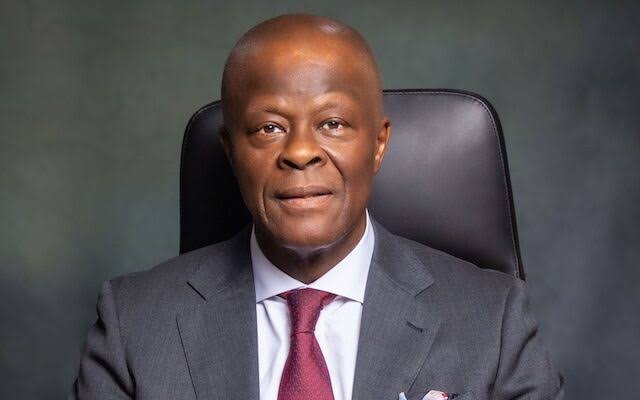
The Minister of Finance and Coordinating Minister of the Economy, Wale Edun, disclosed this during an interview on Politics Today on Channels Television on Wednesday.
Edun said the administration of Bola Ahmed Tinubu would instead explore alternative measures to ease the cost-of-living pressure on Nigerians without reversing key economic reforms.
“Rather than reverting back and taking a backward step, we will look at every other measure that can help the cost of living of Nigerians without resorting to non-market pricing,” the minister said.He explained that the government’s economic strategy is anchored on market-driven pricing for petroleum products and foreign exchange, policies introduced to eliminate longstanding distortions in the economy.
“It is the market price. That is what has been instilled by Mr President that was missing for so long, market pricing of petroleum products,” Edun added.
The minister acknowledged that the ongoing tensions in the Middle East could influence global oil prices but noted that the government would rely on targeted policy measures rather than direct intervention in fuel pricing.
Asked whether authorities might step in if petrol prices surge significantly, he maintained that government intervention would only be considered as a last resort.
“Normally, given the policies and philosophy of this government, it would always have to be a last resort,” he said.
Edun also pointed to Nigeria’s growing domestic refining capacity as a major buffer against external energy shocks. He noted that local production could now meet the country’s fuel demand.
According to him, Nigeria consumes about 50 million litres of petrol daily, and domestic refiners, including the Dangote Refinery, have indicated their ability to meet that demand.
“Our demand is about 50 million litres per day, and the refiners say they can meet that demand, so we are in a relatively strong position,” he said.
He added that investments in refining have strengthened Nigeria’s resilience against global supply disruptions that have forced some countries to ration fuel supplies.
As part of measures to reduce transportation costs, the government is also expanding its compressed natural gas initiative. Edun said the administration plans to deploy about 100,000 additional vehicle conversion kits nationwide.“One of the ways the President immediately announced was 100,000 extra CNG conversion kits to enable vehicles to convert to CNG fuel, which is maybe 25 to 30 per cent of the cost of petrol,” he said.
Despite the potential revenue gains from higher oil prices, the minister cautioned that geopolitical tensions also come with economic risks, including higher freight costs and supply chain disruptions.
“You have gains on one side from higher oil prices, but you also have costs on the other side, particularly freight and other supply chain disruptions,” he noted.
Edun further warned that persistent global inflationary pressures could push interest rates higher worldwide, increasing borrowing costs for many economies, including Nigeria.
He said the Nigerian economy has shown resilience despite external shocks, citing improvements in exchange rate stability, external reserves, inflation trends and economic growth.
According to the minister, reforms such as fuel subsidy removal and exchange rate unification have helped stabilise macroeconomic conditions following what he described as challenging economic conditions inherited by the current administration.
Edun disclosed that Nigeria’s public debt stood at about N122 trillion when the government took office, including roughly N30 trillion in Ways and Means advances that were later regularised.
He also noted that exchange rate adjustments added about N47 trillion to the naira value of the country’s debt stock, increasing the cost of servicing public obligations.
“We are coping with a huge debt service burden which was inherited,” he said.
On poverty reduction, Edun said the administration aims to accelerate economic growth to at least seven per cent annually from the current rate of about four per cent in order to significantly reduce poverty levels.
He added that social protection programmes have already reached about 10 million households equivalent to roughly 50 million Nigerians through direct payments, while new financing initiatives are being developed to support micro, small and medium enterprises, which account for about 85 per cent of private sector activity.
Edun also said initiatives such as the National Single Window project are expected to simplify export processes and strengthen trade integration within the Economic Community of West African States and the African Continental Free Trade Area.
While acknowledging that global developments could still affect the economy, he said the government’s focus remains on protecting recent macroeconomic gains and ensuring that food prices remain affordable for Nigerians.
