
Patience Jonathan Says Nigeria Lacks Commitment to Women’s Inclusion, Seeks Legal Backing for 35% Affirmative Action

Former First Lady of Nigeria, Patience Jonathan, has renewed her call for stronger legislative measures to ensure women’s participation in politics, insisting that the proposed 35 per cent affirmative action for women in governance must be enshrined in law.
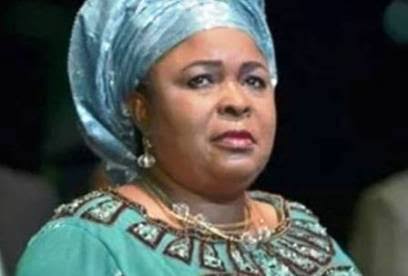
She made the remarks at a women’s conference organized by the Pan Niger Delta Forum (PANDEF) in Yenagoa, responding to comments by Bayelsa State Governor Douye Diri on women’s political engagement.
Governor Diri had argued that women should strive for full political participation without relying on special concessions, warning that reserved seats might portray women as second-class citizens. He stressed that women should compete on equal footing, noting that countries like Britain and the United States operate successfully without quota systems for women in parliament.
Diri acknowledged that special seats might serve as a temporary measure but expressed discomfort with the idea, emphasizing that Nigerian women have the intellect and professional experience to succeed in politics. He cited his own daughter, who earned a PhD in law at 26, as an example of young Niger Delta women excelling academically and professionally.
“The main barrier for women in Nigerian politics is structural, not capability,” he said, highlighting his administration’s efforts to boost women’s participation through appointments and political opportunities. He lamented that, despite expecting five women to be elected to the Bayelsa State House of Assembly in 2023, only two succeeded.
While Diri encouraged continued advocacy for women’s representation, Jonathan strongly disagreed with relying on goodwill or voluntary inclusion.
“We do not want mere inclusion that depends on the generosity of any government,” she said. “If inclusion is not backed by law, any administration can reverse it tomorrow.”
Jonathan emphasized that the Special Seats Bill before the National Assembly must be passed to guarantee women occupy a minimum share of political offices. She noted that Nigeria’s political environment differs from some developed countries and requires deliberate policy interventions to ensure progress.
Citing examples from Africa, she highlighted that countries like Angola already guarantee 35 per cent representation for women, and many others have adopted similar policies. She urged Nigerian women across parties and regions to unite, setting aside partisan differences to achieve this common goal.
“Women in Nigeria must come together regardless of party affiliation. That is the only way we can succeed,” Jonathan said.
She also stressed that political parties must adopt mandatory quotas for women within their internal leadership structures, noting that party structures are critical pathways to public office.
“The political party is the gateway to power. If women are not part of the foundation of these parties, it will be difficult for them to become future leaders,” she said.
Her remarks have reignited national discussions on gender equality and political representation, highlighting the urgent need for legal guarantees to ensure women’s participation in governance, where they remain significantly underrepresented despite making up nearly half of Nigeria’s population.
