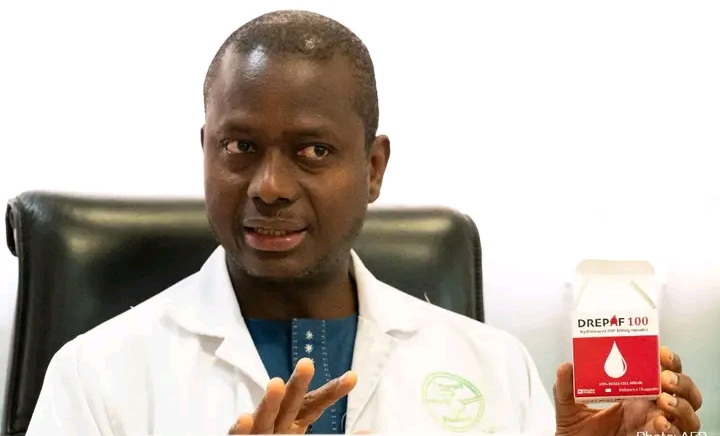
Senegal-made sickle cell treatment raises hopes, reduces costs

Senegal has taken a major step in the fight against sickle cell disease after pharmaceutical company Teranga Pharma began locally manufacturing DREPAF, a generic version of hydroxyurea used to manage the inherited blood disorder.
 The development is being celebrated as a major milestone for Africa because the continent carries a very large share of the global sickle cell burden, while many patients have historically depended on medicines imported from Europe and other parts of the world.
DREPAF is not a new cure for sickle cell disease. It contains hydroxyurea, an established treatment that can help reduce painful crises, hospitalisations, blood transfusion requirements and other complications associated with the disease.
The medicine is produced by Teranga Pharma in partnership with Drep.Afrique. It received marketing authorisation in Senegal in April 2025, with commercial distribution beginning in early 2026. The drug is available in a 500 mg formulation for adults and a 100 mg paediatric formulation, with the children’s formulation designed for use from around nine months of age under medical supervision.
Teranga Pharma CEO Mouhamadou Sow said the initiative was driven by the need to make essential sickle cell treatment more accessible to African patients. The company hopes local manufacturing will reduce dependence on imported medicines and make treatment more affordable.
The development is particularly important for families who struggle with the cost and availability of imported medicines. Reports indicate that DREPAF is priced below some imported hydroxyurea products, potentially making long-term treatment more accessible.
Teranga Pharma is also looking beyond Senegal. The company is working with an Indian technical partner to increase production and expand supplies to other African countries. It has reported collaboration with countries including Burkina Faso, Guinea and Côte d’Ivoire, while receiving interest from the Democratic Republic of Congo, Gabon and Cameroon.
IMPORTANT CLARIFICATION
The viral claim that Senegal is “Africa’s first” to locally produce sickle-cell treatment needs some qualification.
The specific significance of Senegal’s development is the local production of DREPAF, a generic hydroxyurea treatment, rather than the invention of a new sickle-cell cure. Some sources have also documented local production of hydroxyurea in Nigeria, so the broader “first country in Africa ever to manufacture sickle-cell treatment” wording is potentially misleading.
Nevertheless, Senegal’s DREPAF project represents an important step toward African pharmaceutical self-reliance, potentially improving access to affordable sickle cell treatment for patients across the continent.
DREPAF does not cure sickle cell disease; it is a treatment used to manage the condition and reduce complications. Its use should be guided by a qualified healthcare professional.