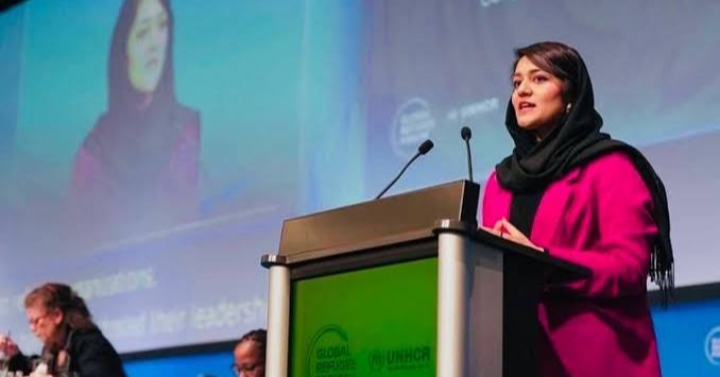
AFGHAN WOMAN WHO SURVIVED TALIBAN RESTRICTIONS NOW BLOCKED FROM STUDYING AT OXFORD BY UK RULES

An Afghan woman who survived years of Taliban restrictions and fought for her right to education has been left devastated after being blocked from taking up a place at the University of Oxford because of new UK immigration rules.
 Aisha Khurram, an Afghan human rights activist, had hoped to fulfil her dream of studying at Oxford after receiving an offer from the prestigious university. However, the opportunity has now been thrown into uncertainty after changes to the UK’s immigration policies prevented her from entering the country to begin her studies.
Khurram said she had already endured years of danger and uncertainty while pursuing education in Afghanistan, where the Taliban’s restrictions on women and girls have severely limited access to schools and universities.
The young activist reportedly has not seen her family for five years after fleeing Afghanistan.
Despite overcoming the challenges of displacement and continued threats to her future, she believed her admission to Oxford represented a new beginning.
However, new Home Office rules have now created another major obstacle, leaving her unable to travel to the UK to take up her place at the university.
The case has drawn attention to the growing difficulties faced by Afghan women seeking educational opportunities abroad. Since returning to power in 2021, the Taliban have imposed sweeping restrictions on women and girls, including bans on secondary and higher education. UNESCO estimates that millions of Afghan girls have been affected by the restrictions.
Khurram’s story has sparked concern among campaigners, who argue that education remains one of the few pathways through which Afghan women can rebuild their lives and continue their academic and professional ambitions.
For Khurram, the chance to study at Oxford was meant to be a symbol of hope after years of struggle. Instead, she now faces the painful possibility of losing an opportunity she fought so hard to achieve.