NIGERIA RECORDS WEST AFRICA’S FIRST TELE-ROBOTIC SURGERY AS SURGEONS REMOVE CANCEROUS KIDNEY TUMOUR REMOTELY

Nigeria has recorded what medical institutions involved described as West Africa’s first tele-robotic surgery, with a surgeon remotely operating on a patient in Abuja to remove a kidney affected by a cancerous tumour.
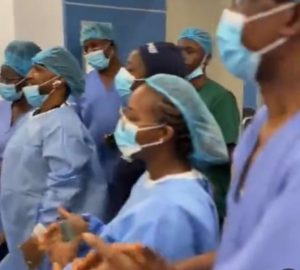
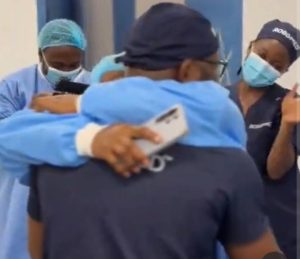
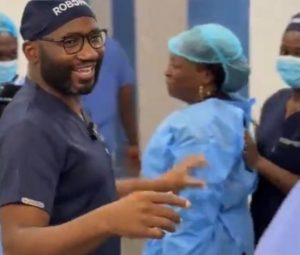
 The procedure was performed on September 19, 2026, through a collaboration between Redeemer’s Health Village (RHV) in Ogun State, RoboMed Global and Nisa Premier Hospital in Abuja.
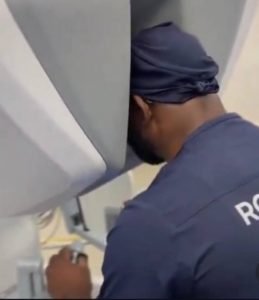
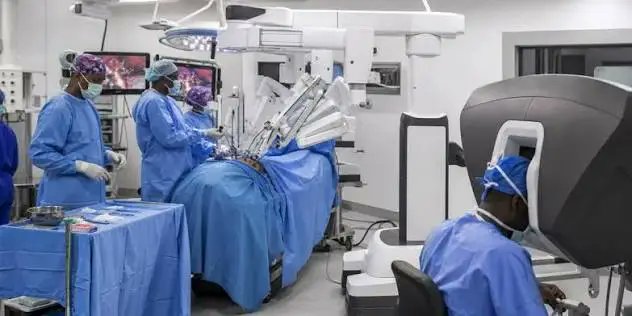
The patient remained at Nisa Premier Hospital in Abuja while Professor Obi Ekwenna-Davis, a Professor of Urology and Transplantation and co-founder of RoboMed Global, controlled a robotic surgical system remotely from RHV. The two locations are about 500 kilometres apart.
The operation was a robot-assisted right radical nephrectomy, a procedure in which the affected kidney is removed. In this case, the kidney contained a cancerous tumour.
Using a Toumai robotic surgical console, the surgeon’s movements were transmitted in real time to the robotic system at the Abuja hospital, allowing the operation to be carried out without the lead surgeon being physically present in the operating theatre.
According to Professor Ekwenna-Davis, the operation lasted about three hours, with brief pauses to confirm that the equipment and supporting systems were functioning properly. He said the patient was in good condition following the procedure and was expected to be discharged within 24 hours.
Tele-robotic surgery uses robotic equipment, telecommunications technology and real-time data transmission to allow surgeons to perform procedures on patients located in another place. The technology could potentially expand access to specialist surgical expertise for patients who are far from highly specialised medical centres.
The medical teams involved said the achievement could also help reduce the need for Nigerians to travel abroad for certain complex procedures. RHV said it is working with RoboMed Global to establish a robotic academy that would train surgeons, nurses, biomedical engineers and other healthcare professionals. The planned academy is expected to train at least 150 surgeons within two years.
The breakthrough marks another development in Nigeria’s adoption of robotic-assisted surgery and demonstrates how hospitals in different parts of the country can collaborate to provide specialised medical care across geographical distances.